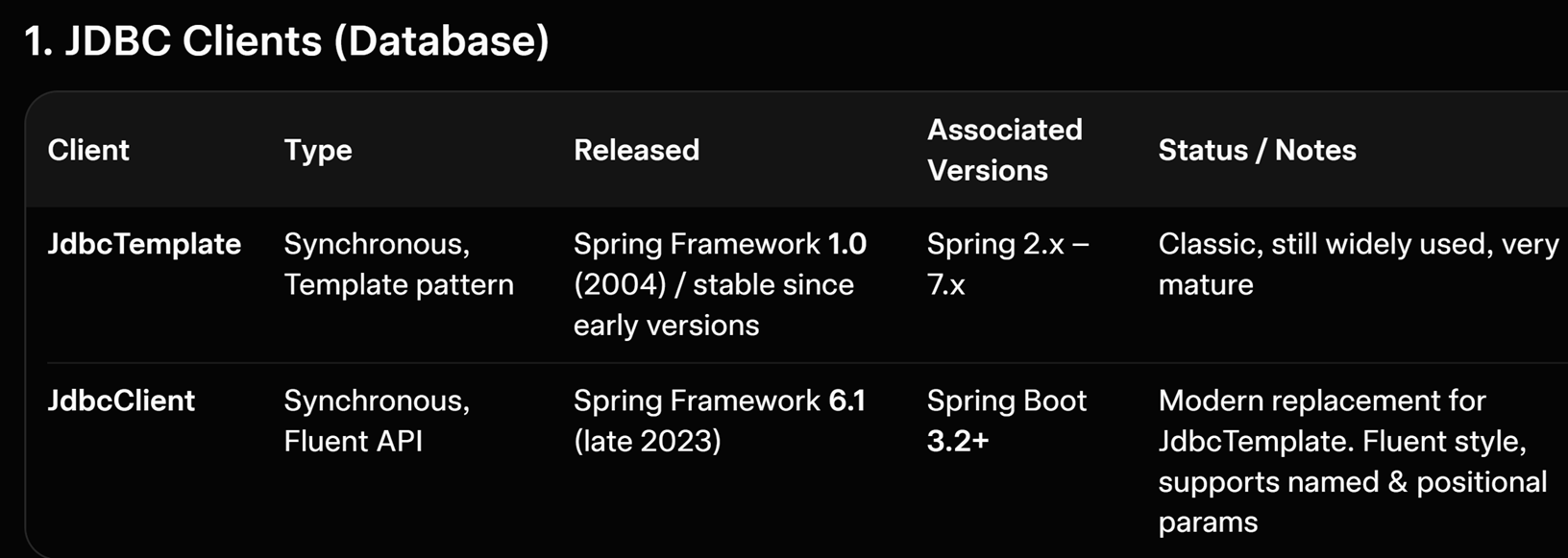
1. JDBC Clients (Database)
|
Client |
Type |
Released |
Associated Versions |
Status / Notes |
|
JdbcTemplate |
Synchronous, Template pattern |
Spring Framework 1.0 (2004) / stable since early versions |
Spring 2.x – 7.x |
Classic, still widely used, very mature |
|
JdbcClient |
Synchronous, Fluent API |
Spring Framework 6.1 (late 2023) |
Spring Boot 3.2+ |
Modern replacement for JdbcTemplate. Fluent style, supports named & positional params |
JdbcClient is the new recommended synchronous JDBC API in modern Spring.
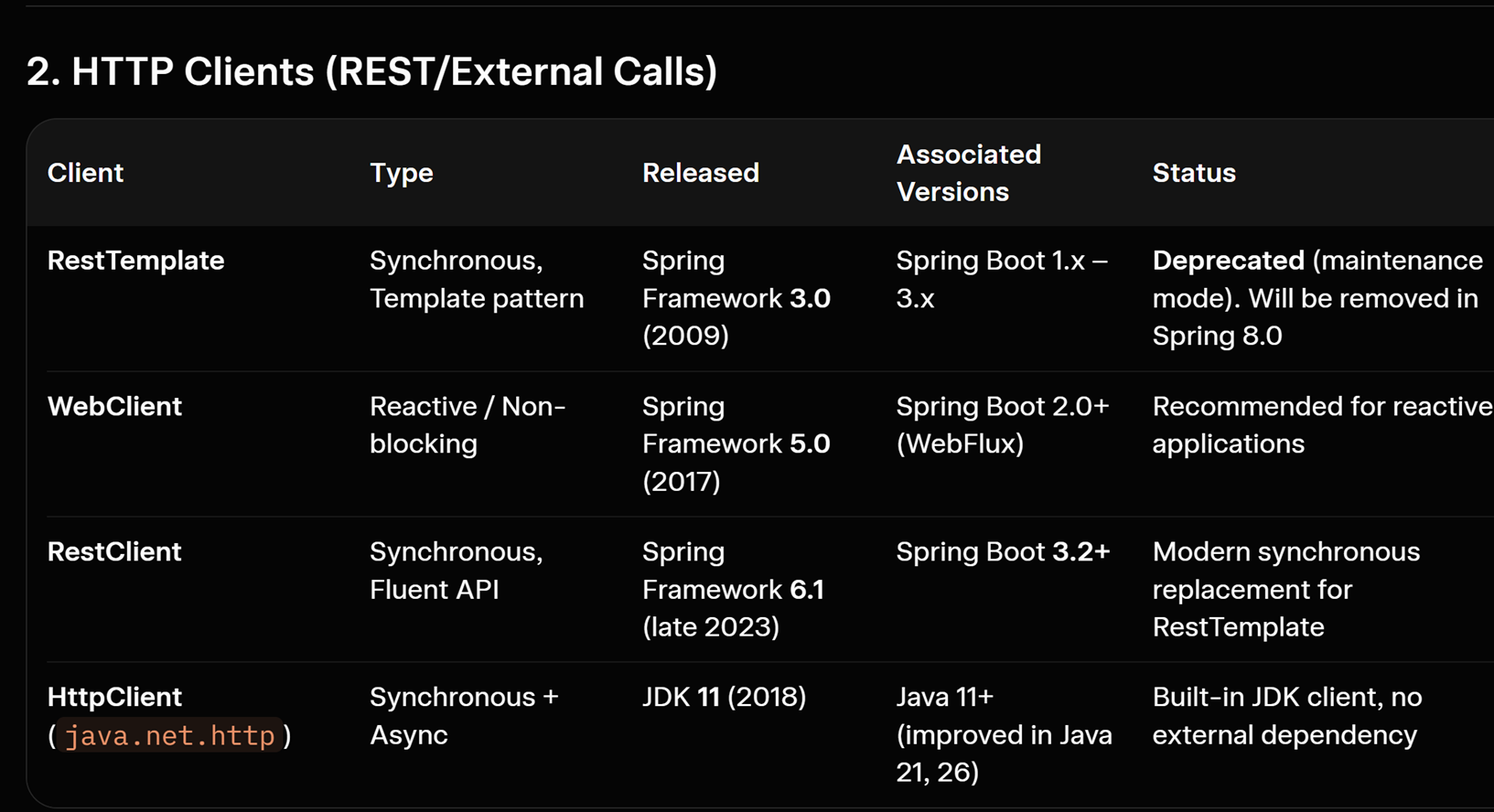
2. HTTP Clients (REST/External Calls)
|
Client |
Type |
Released |
Associated Versions |
Status |
|
RestTemplate |
Synchronous, Template pattern |
Spring Framework 3.0 (2009) |
Spring Boot 1.x – 3.x |
Deprecated (maintenance mode). Will be removed in Spring 8.0 |
|
WebClient |
Reactive / Non-blocking |
Spring Framework 5.0 (2017) |
Spring Boot 2.0+ (WebFlux) |
Recommended for reactive applications |
|
RestClient |
Synchronous, Fluent API |
Spring Framework 6.1 (late 2023) |
Spring Boot 3.2+ |
Modern synchronous replacement for RestTemplate |
|
HttpClient (java.net.http) |
Synchronous + Async |
JDK 11 (2018) |
Java 11+ (improved in Java 21, 26) |
Built-in JDK client, no external dependency |
Quick Recommendation (2026)
· New projects:
o Synchronous → Use JdbcClient + RestClient
o Reactive → Use WebClient
· Existing projects:
o Still on RestTemplate? Plan migration to RestClient
o Still on JdbcTemplate? You can keep it, but JdbcClient is cleaner for new code
Summary Timeline
· 2004–2009: Old era → JdbcTemplate + RestTemplate
· 2017–2018: Reactive era → WebClient (Spring 5) + HttpClient (JDK 11)
· 2023 (Spring 6.1 / Boot 3.2): Modern fluent era → JdbcClient + RestClient
RestTemplate is being phased out (announced deprecation path in 2025).
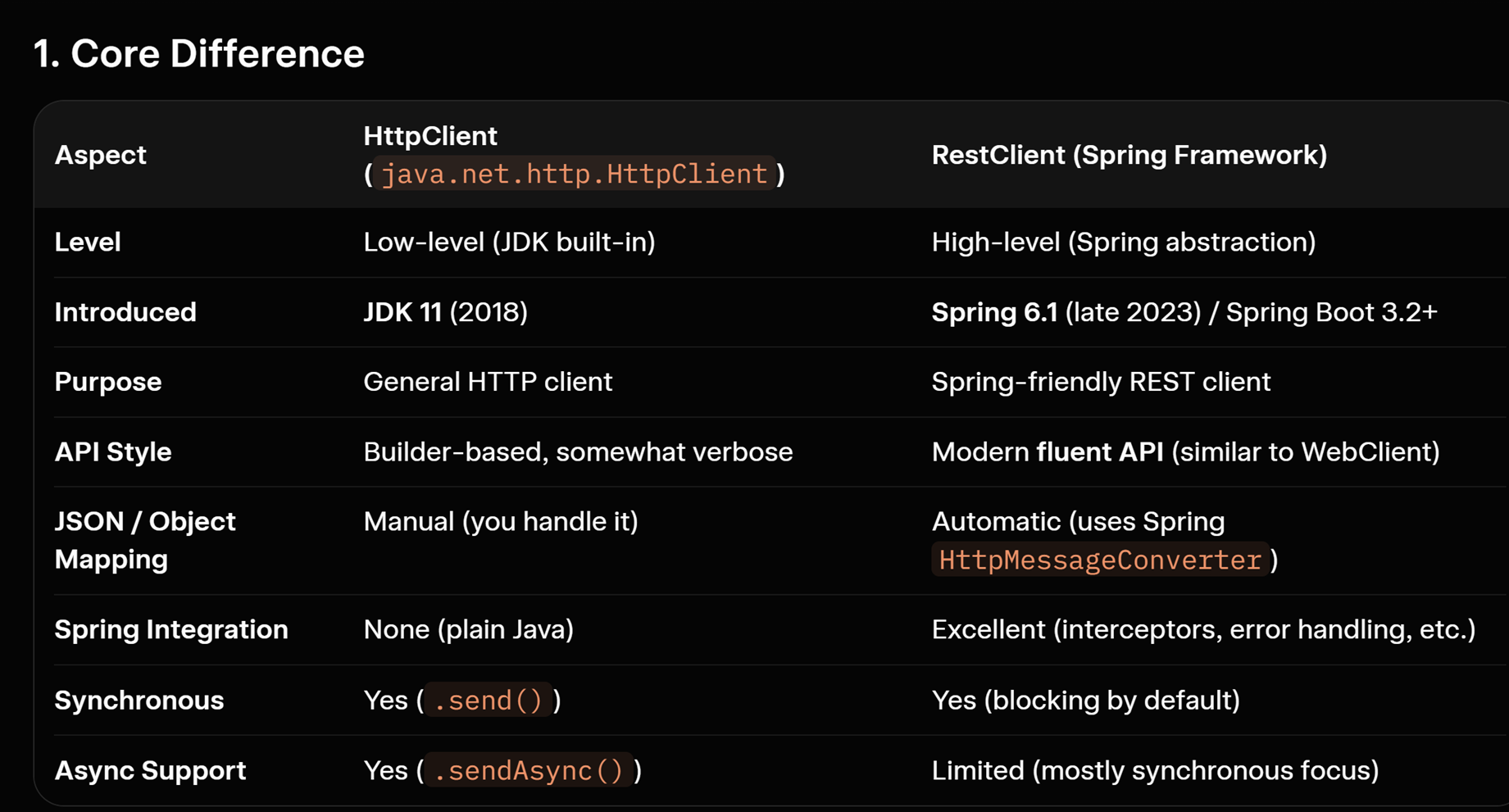
1. Core Difference
|
Aspect |
HttpClient (java.net.http.HttpClient) |
RestClient (Spring Framework) |
|
Level |
Low-level (JDK built-in) |
High-level (Spring abstraction) |
|
Introduced |
JDK 11 (2018) |
Spring 6.1 (late 2023) / Spring Boot 3.2+ |
|
Purpose |
General HTTP client |
Spring-friendly REST client |
|
API Style |
Builder-based, somewhat verbose |
Modern fluent API (similar to WebClient) |
|
JSON / Object Mapping |
Manual (you handle it) |
Automatic (uses Spring HttpMessageConverter) |
|
Spring Integration |
None (plain Java) |
Excellent (interceptors, error handling, etc.) |
|
Synchronous |
Yes (.send()) |
Yes (blocking by default) |
|
Async Support |
Yes (.sendAsync()) |
Limited (mostly synchronous focus) |
2. Why Do Both Exist? (They Don’t Do Exactly the Same Job)
· HttpClient is the foundational HTTP client provided by Java itself. It’s like raw JDBC.
· RestClient is a high-level wrapper built on top of HttpClient (or Apache HttpClient, etc.).
Think of it like this:
|
Analogy |
HttpClient |
RestClient |
|
Database |
JDBC (Statement, ResultSet) |
JdbcClient / JdbcTemplate |
|
HTTP |
java.net.http.HttpClient |
RestClient |
RestClient gives you:
· Automatic JSON serialization/deserialization
· Easy error handling (onStatus())
· Interceptors, filters, logging
· Consistent Spring ecosystem experience
· Fluent, readable code
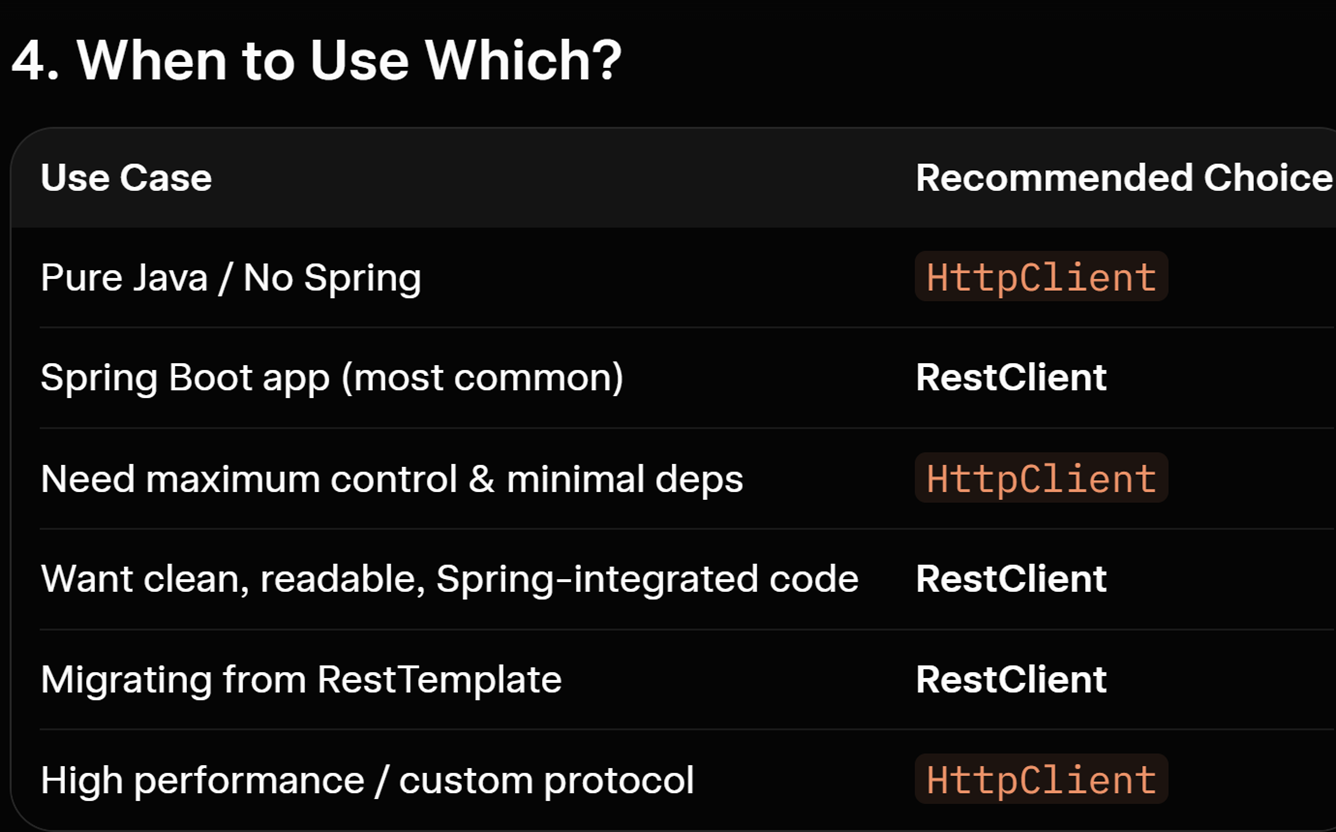
HttpClient = engine
RestClient = comfortable car built on top of the engine.