

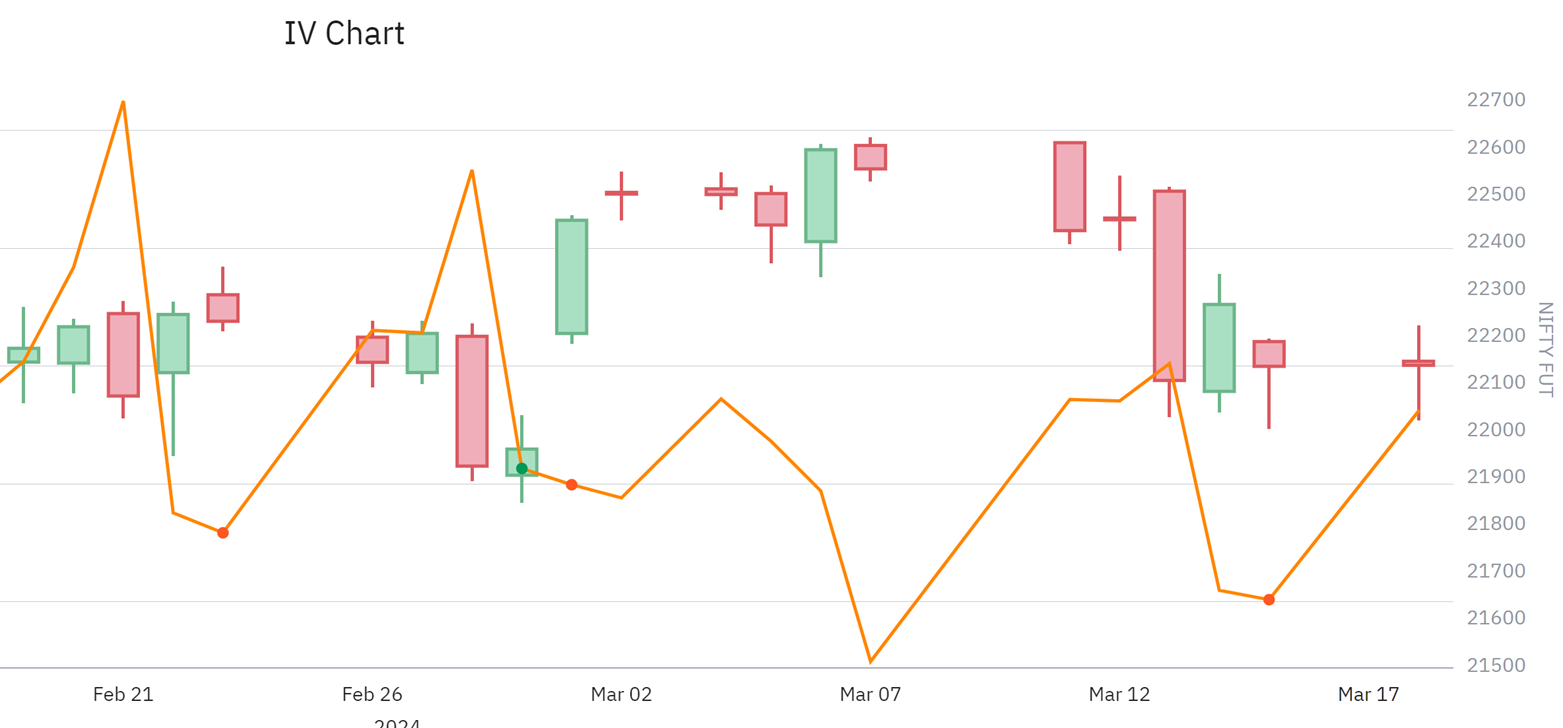
Implied Volatility (IV): It shows how much the market expects the price of an asset to change.
High IV means bigger price swings; low IV means smaller swings.
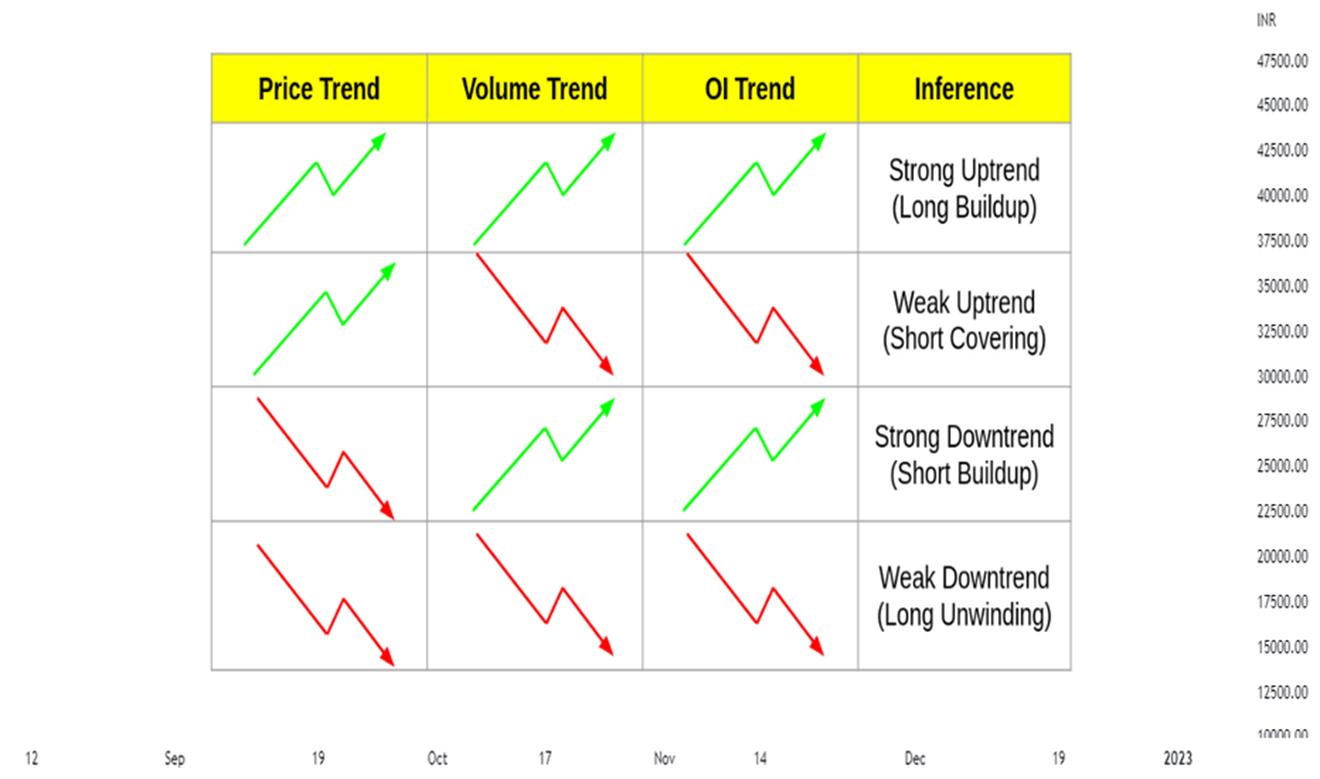
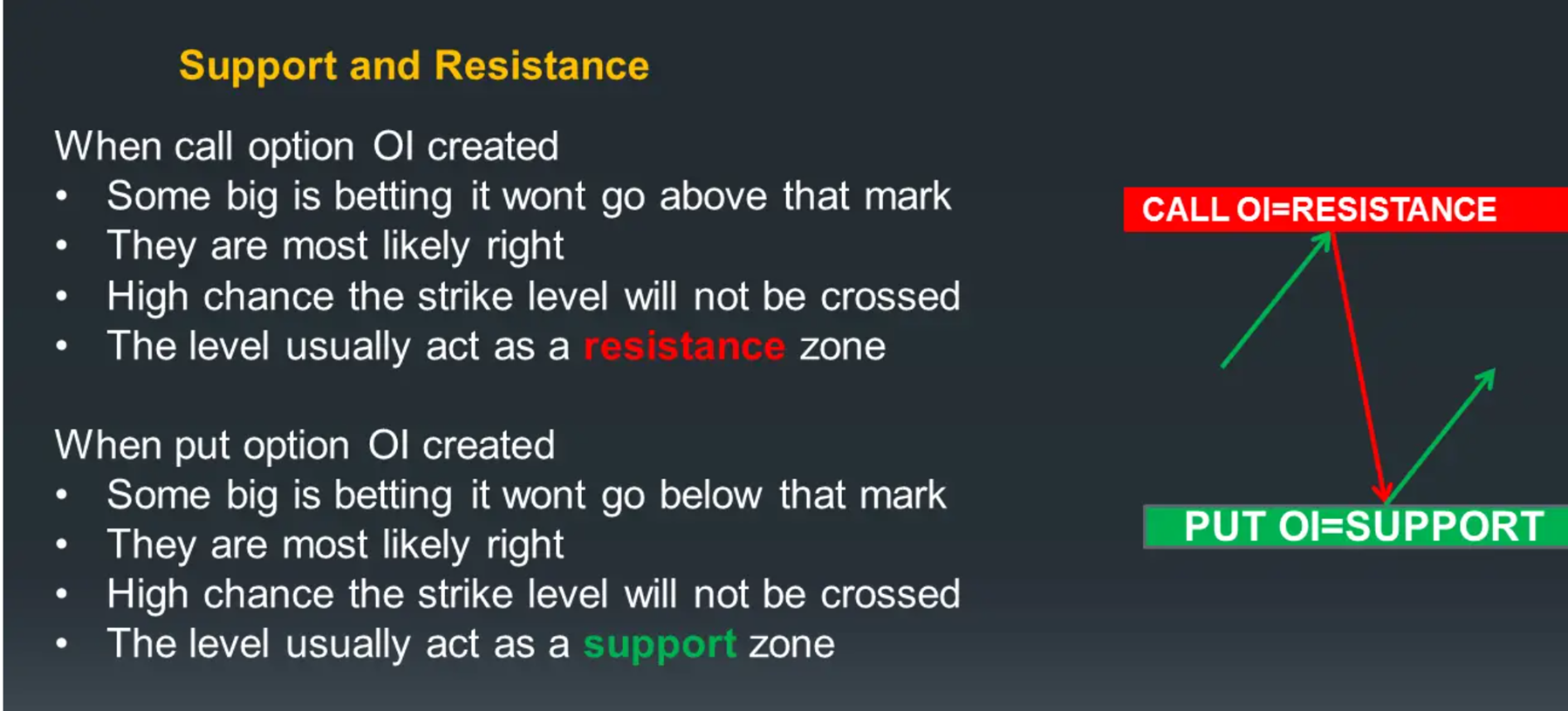
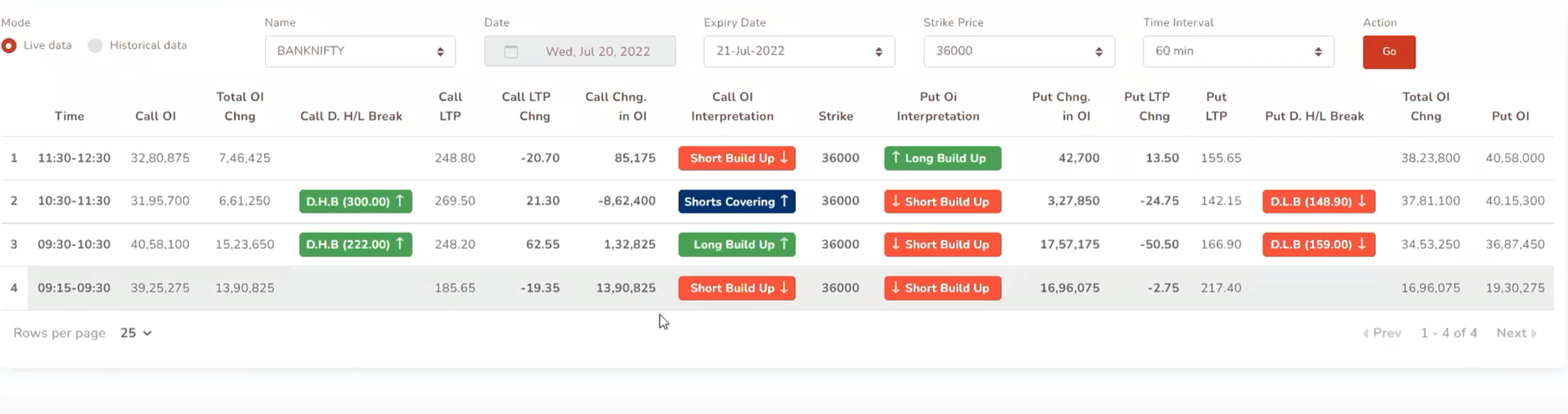
Open Interest (OI): It represents the total number of open (unresolved) option contracts.
Higher OI indicates more active trading in that option.

HOW COME THE SAME RULE APPLIES TO BOTH CALLS AND PUTS ? IS IT CORRECT ?
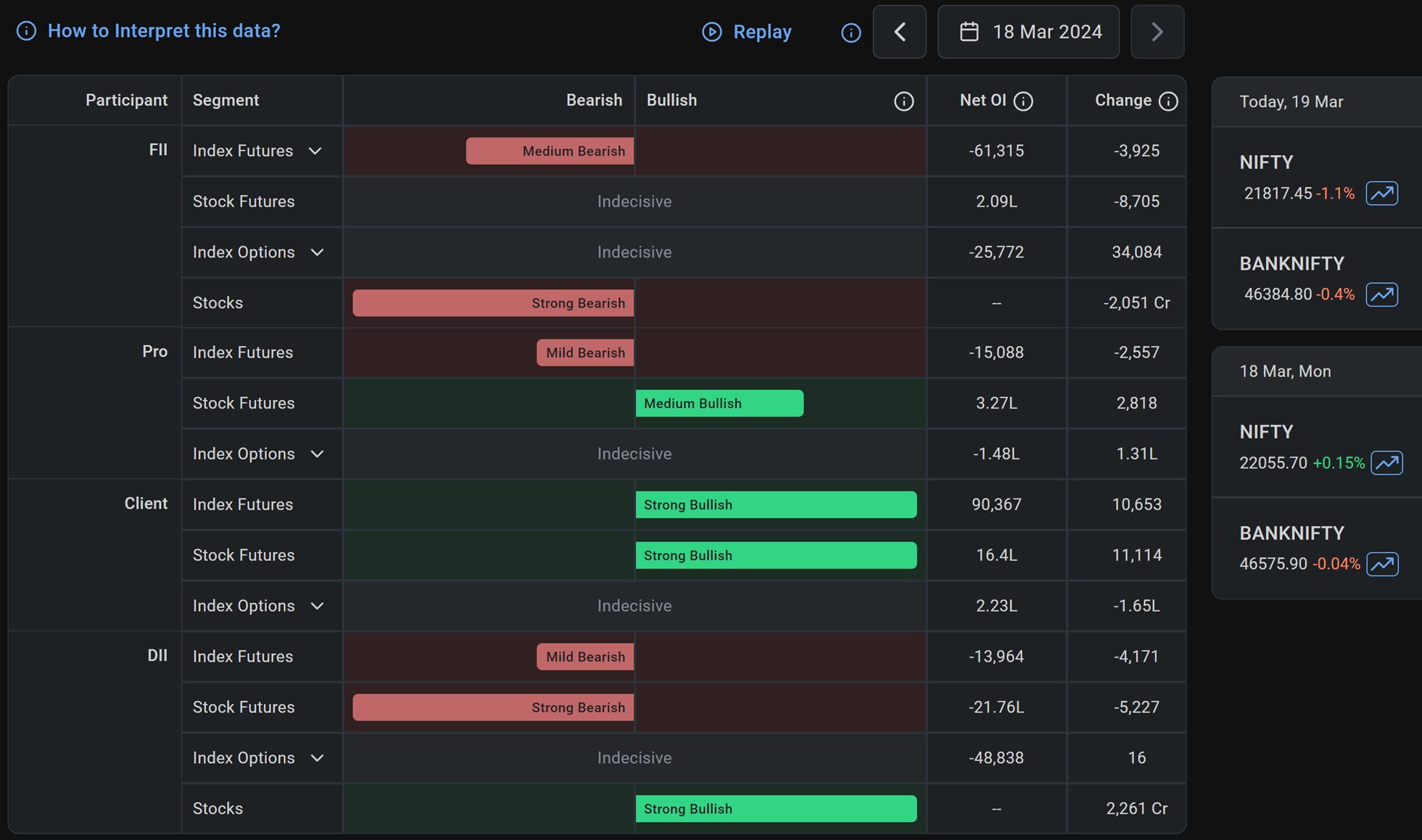
· If FII is bullish in Options and Futures, and Retail is bearish in Options and Futures, the market is expected to go up.
· If FII is bearish in Options and Futures, and Retail is bullish in Options and Futures, the market is expected to go down.
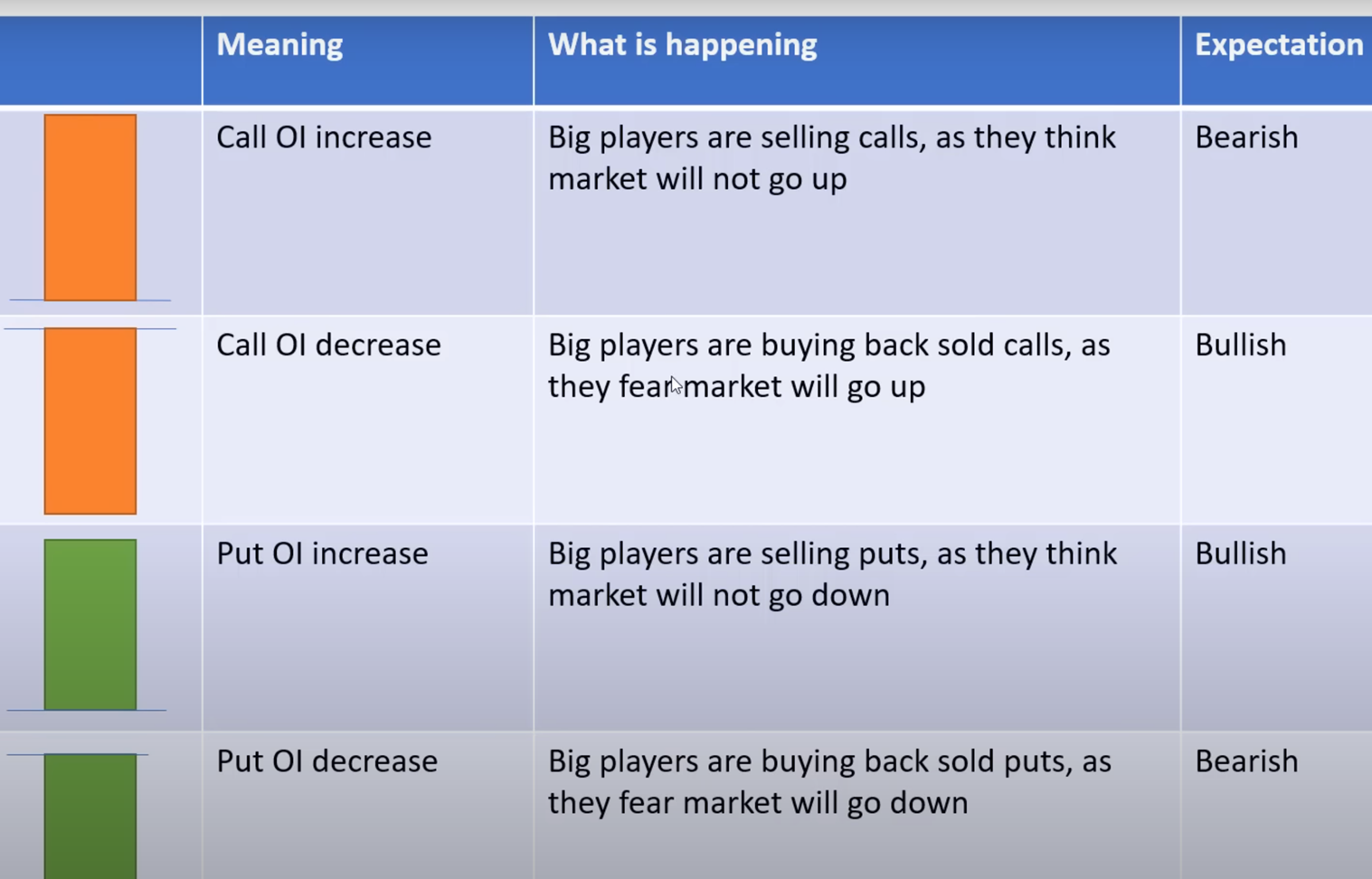

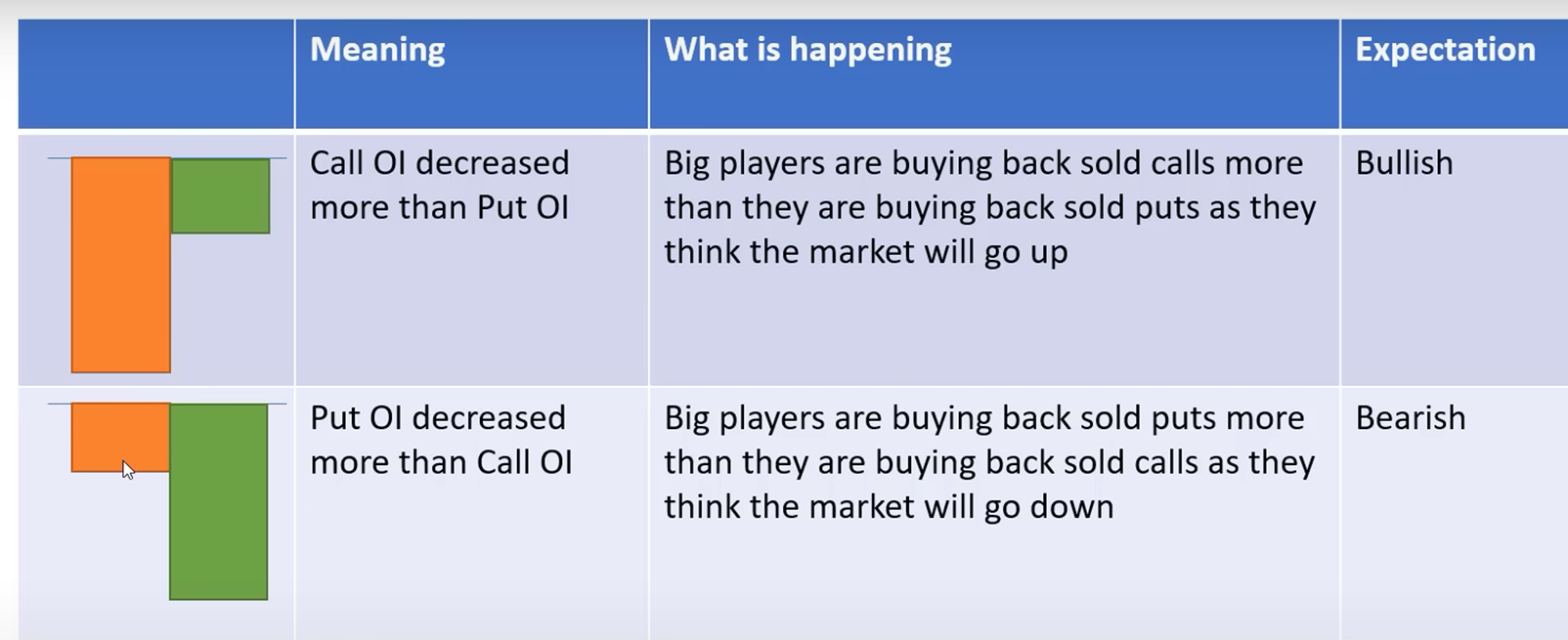
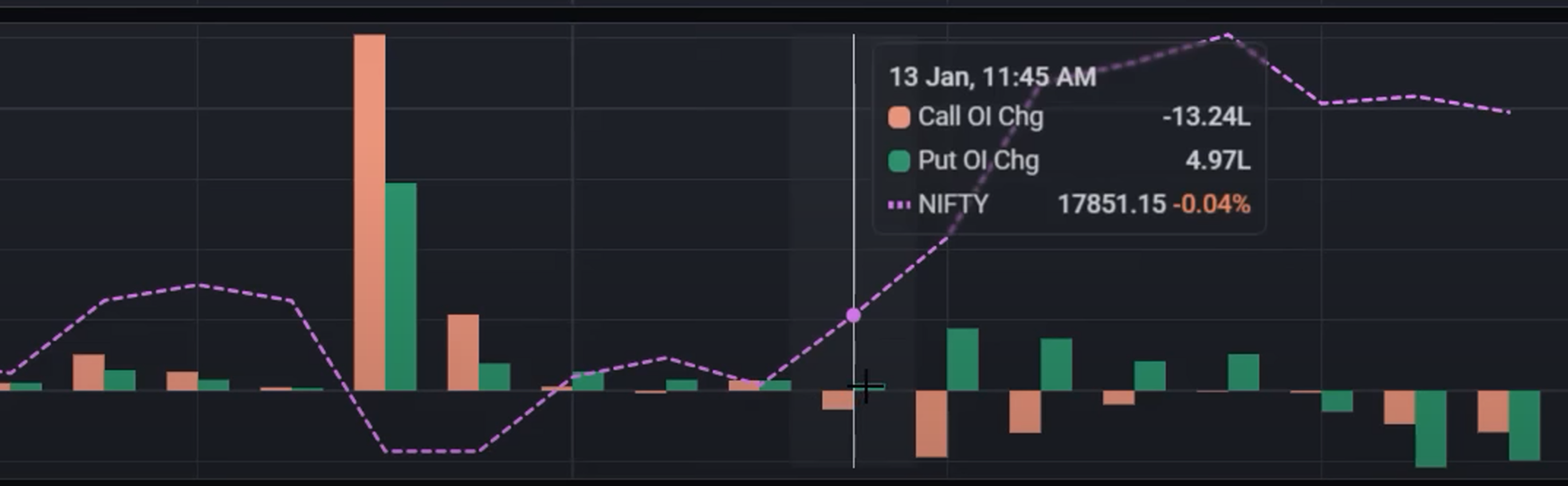
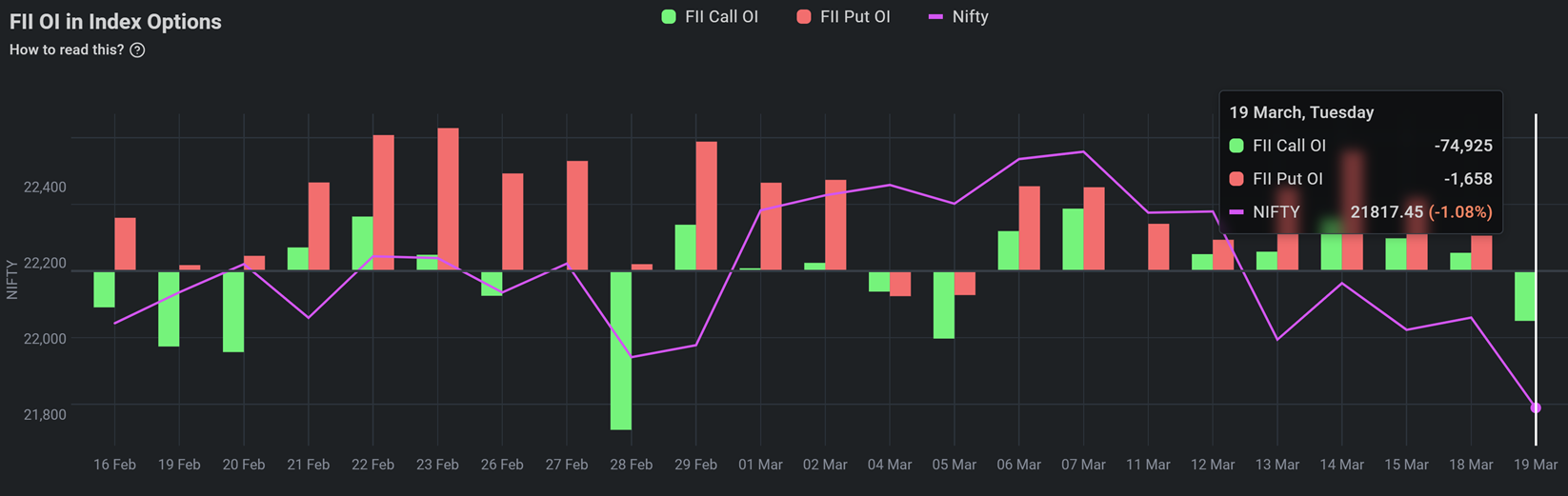
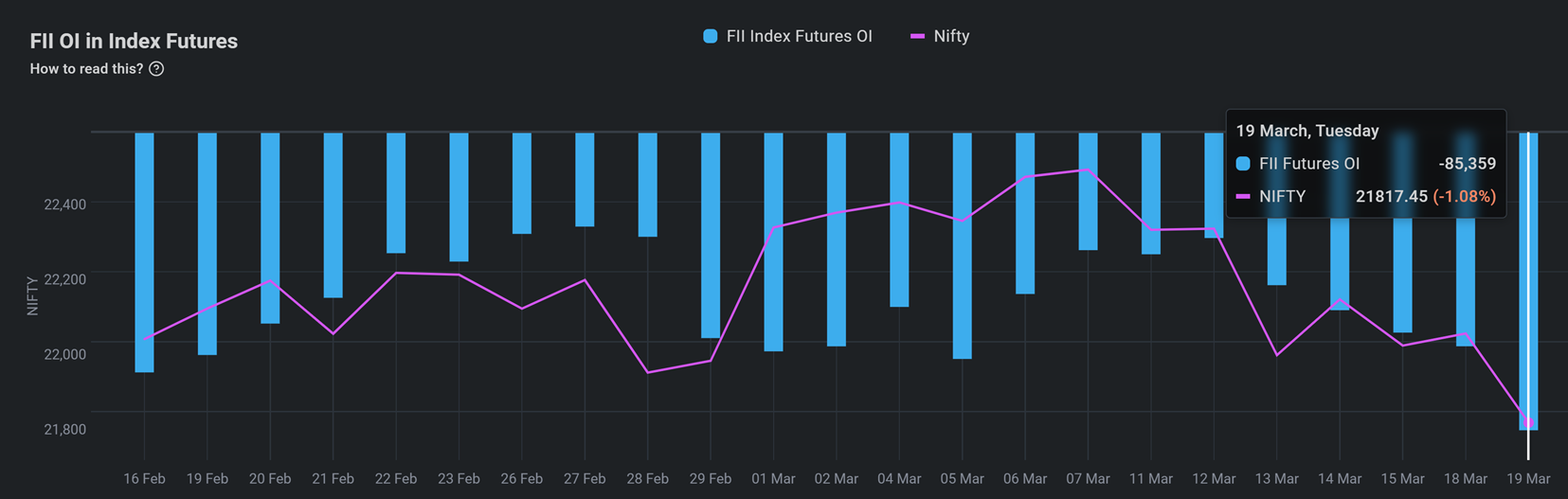
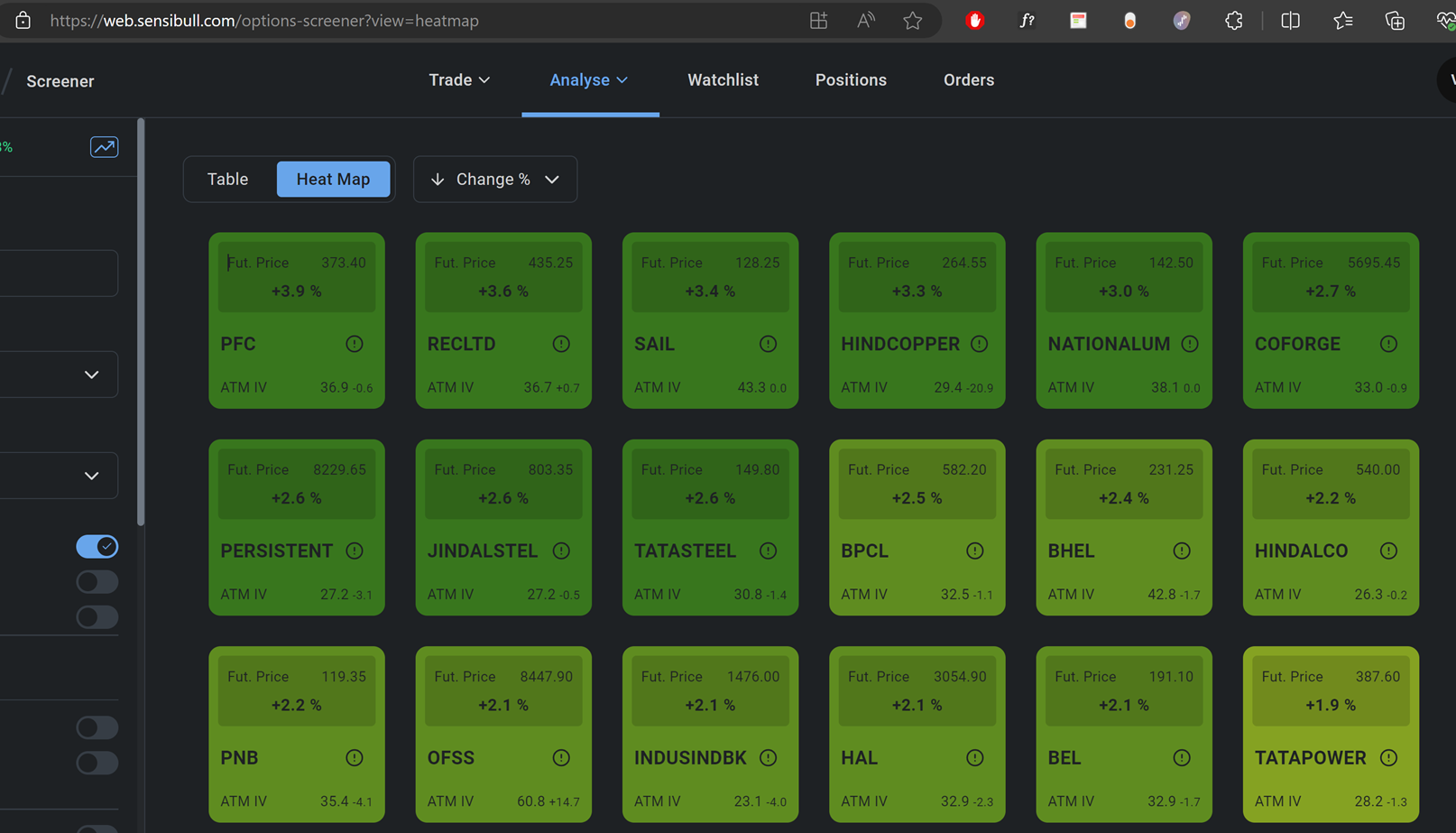
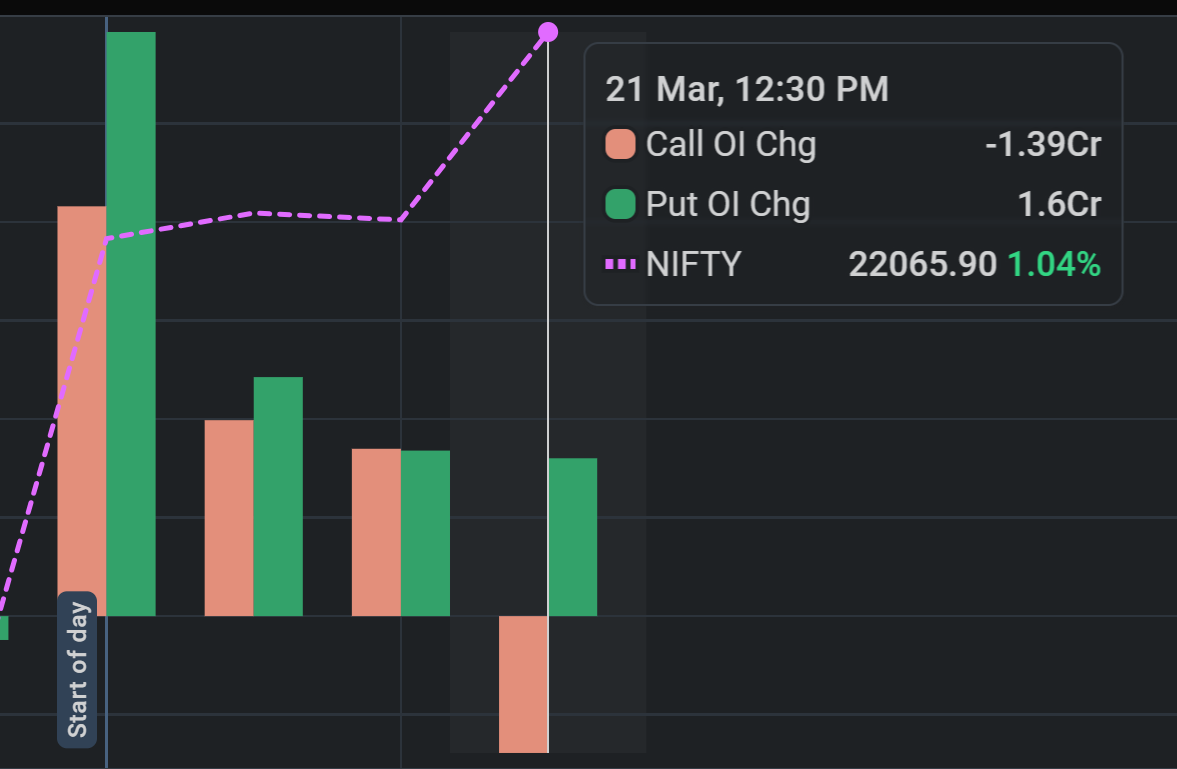
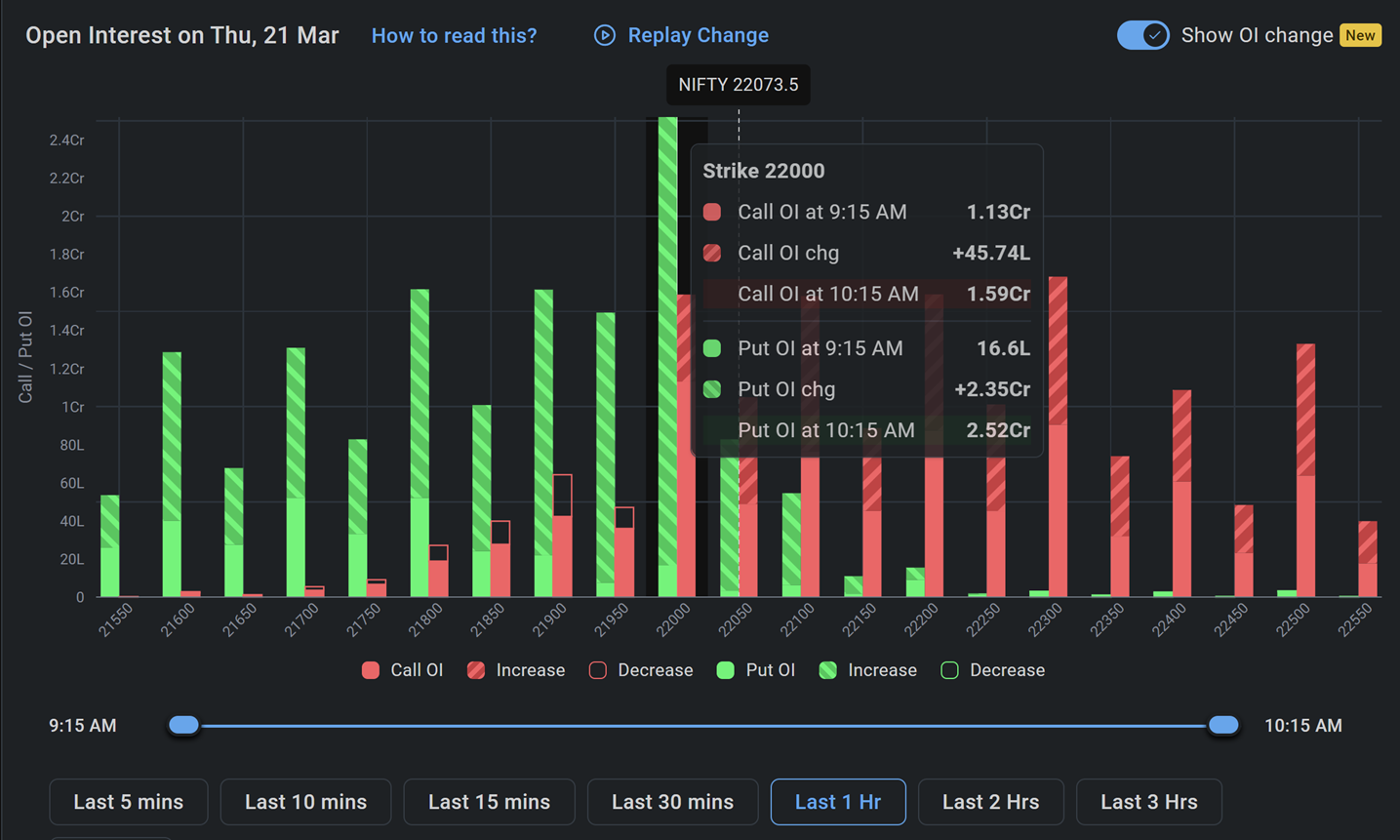
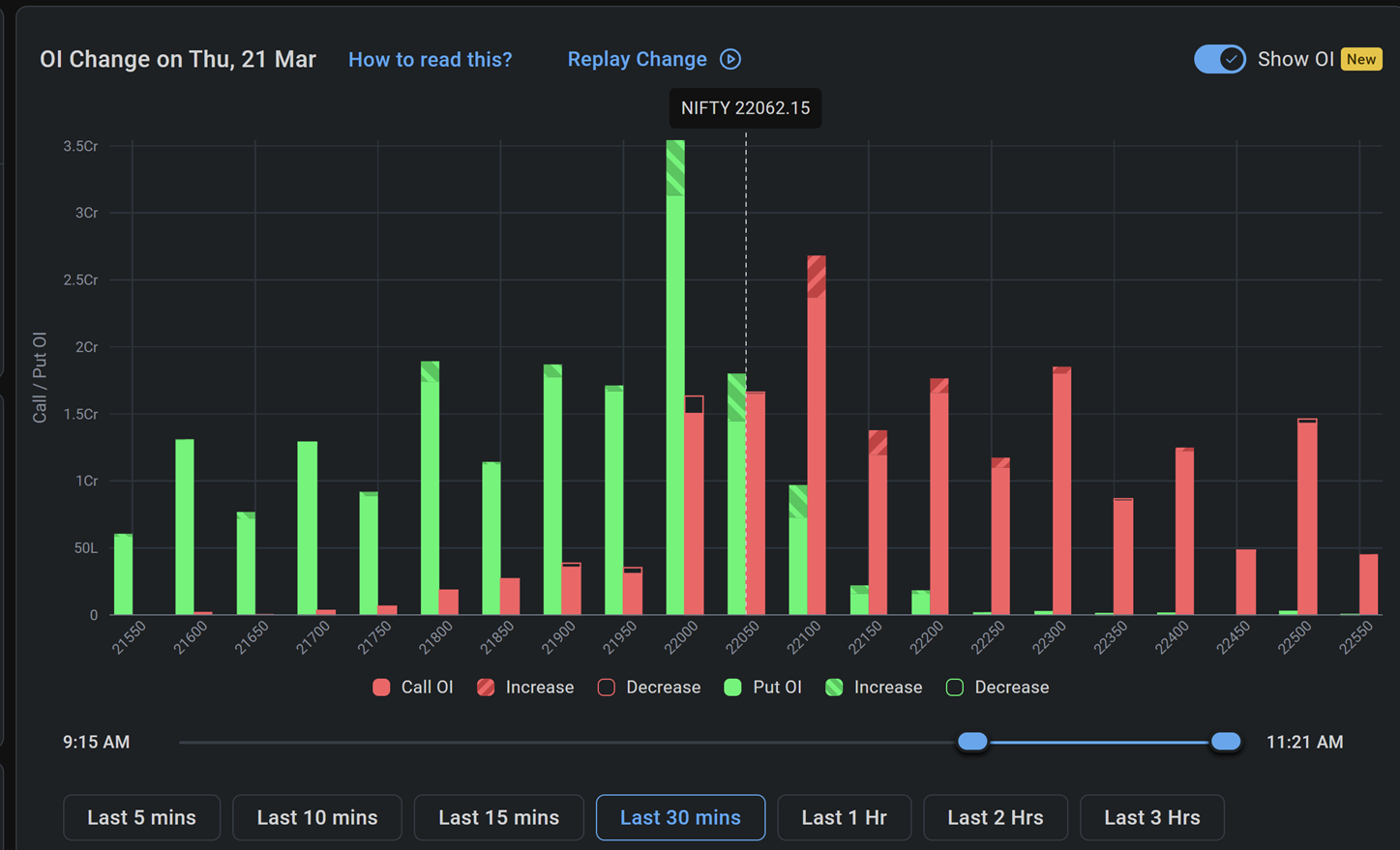
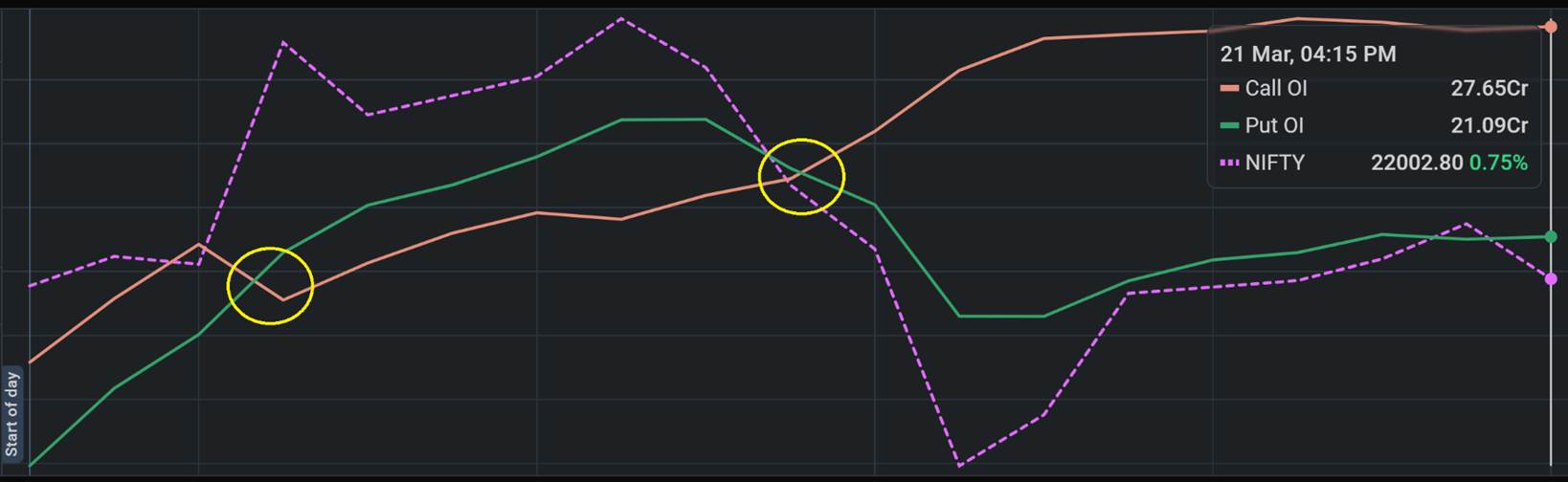
Open Interest Options cross
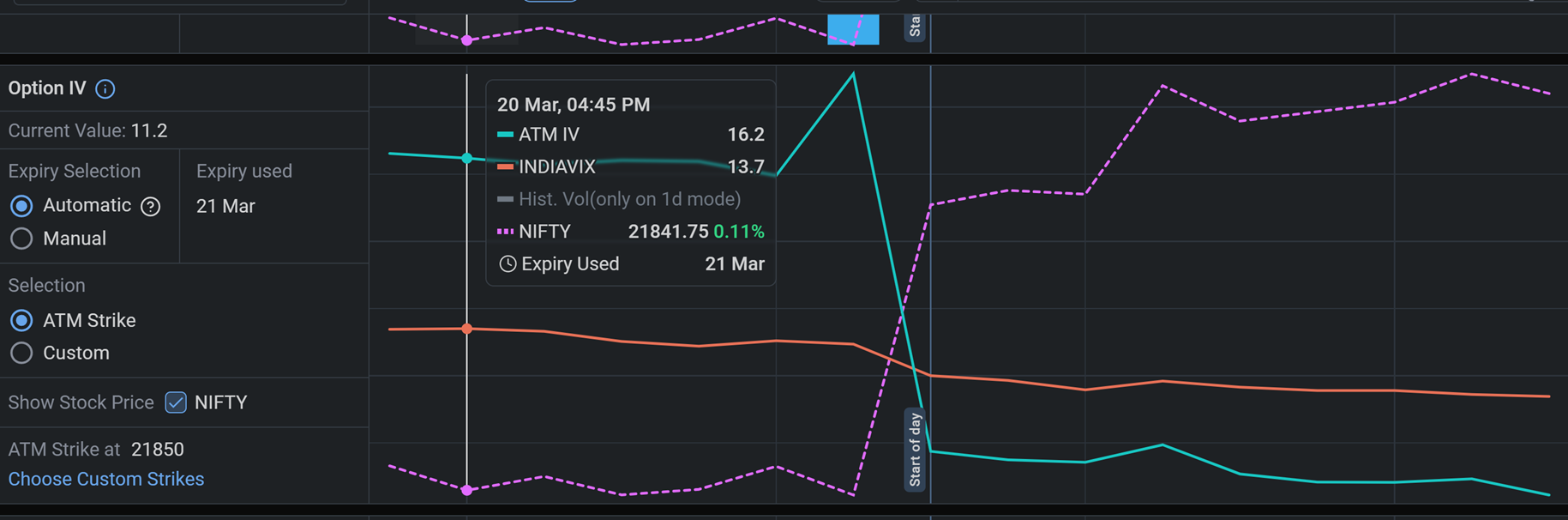
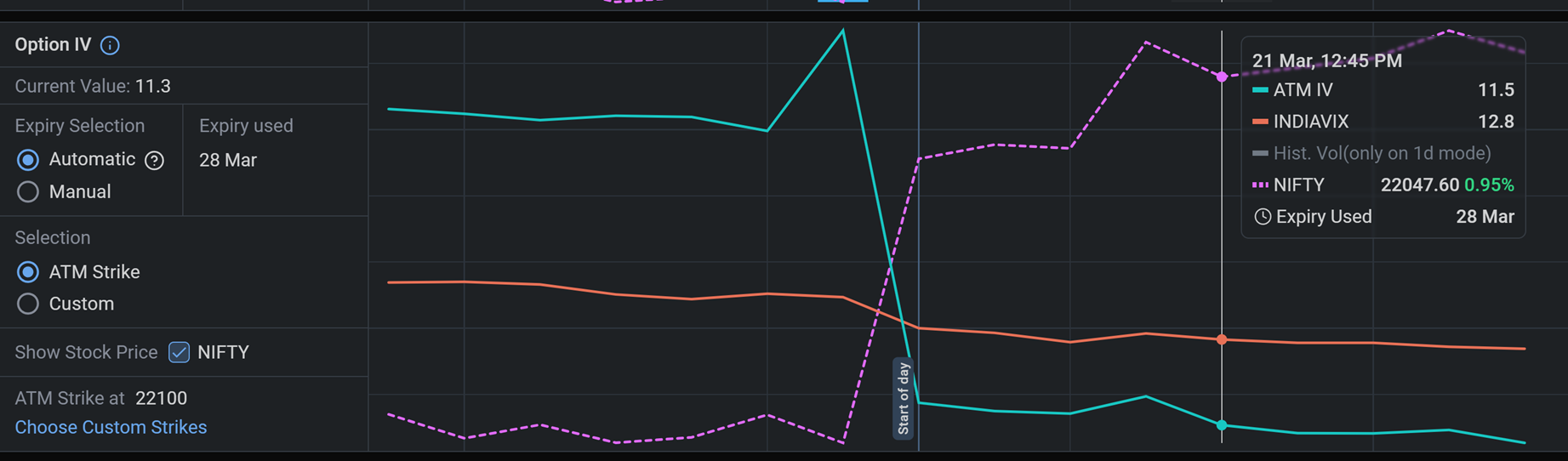
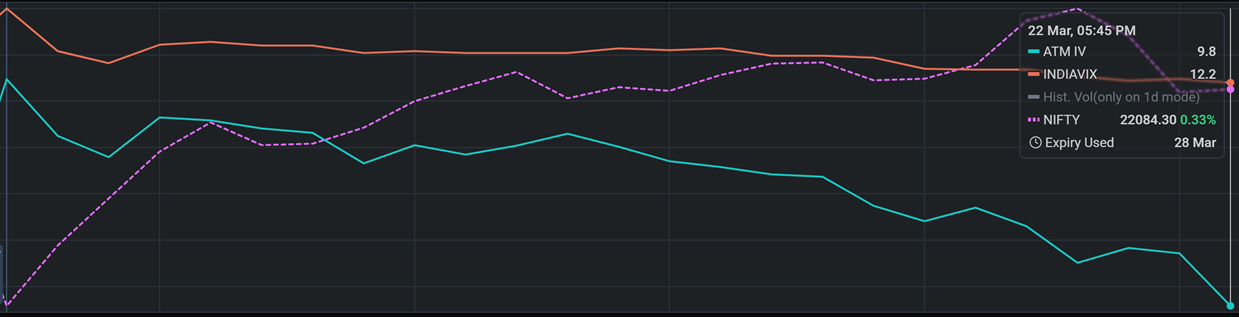
Open IV reduced drastically on the expiry date
21 Mar expiry used
28 Mar expiry used
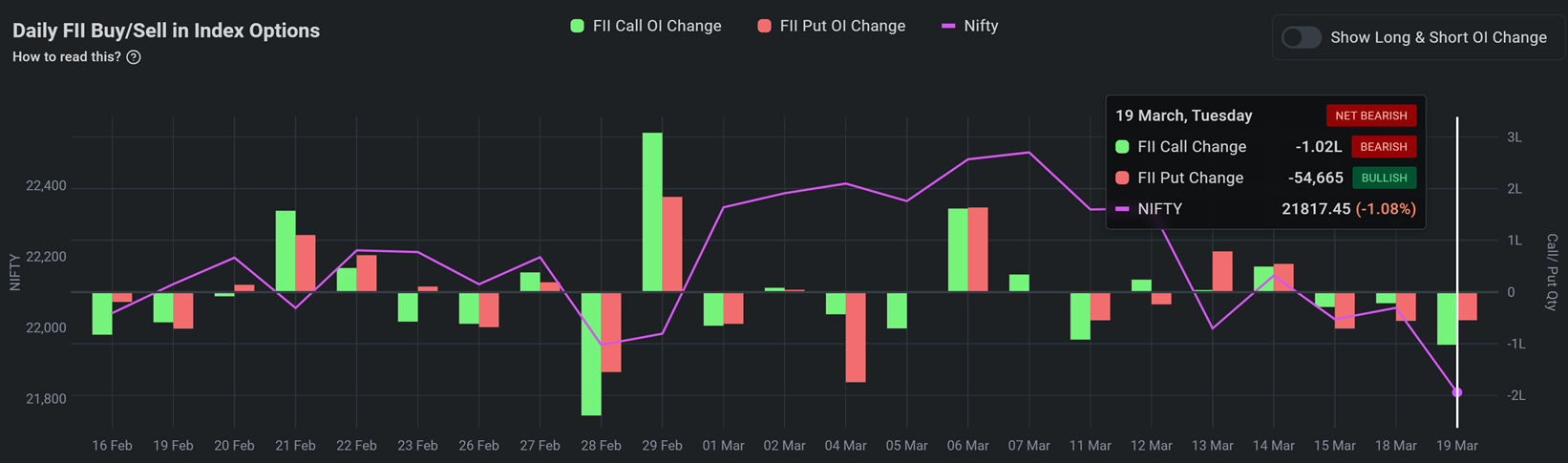
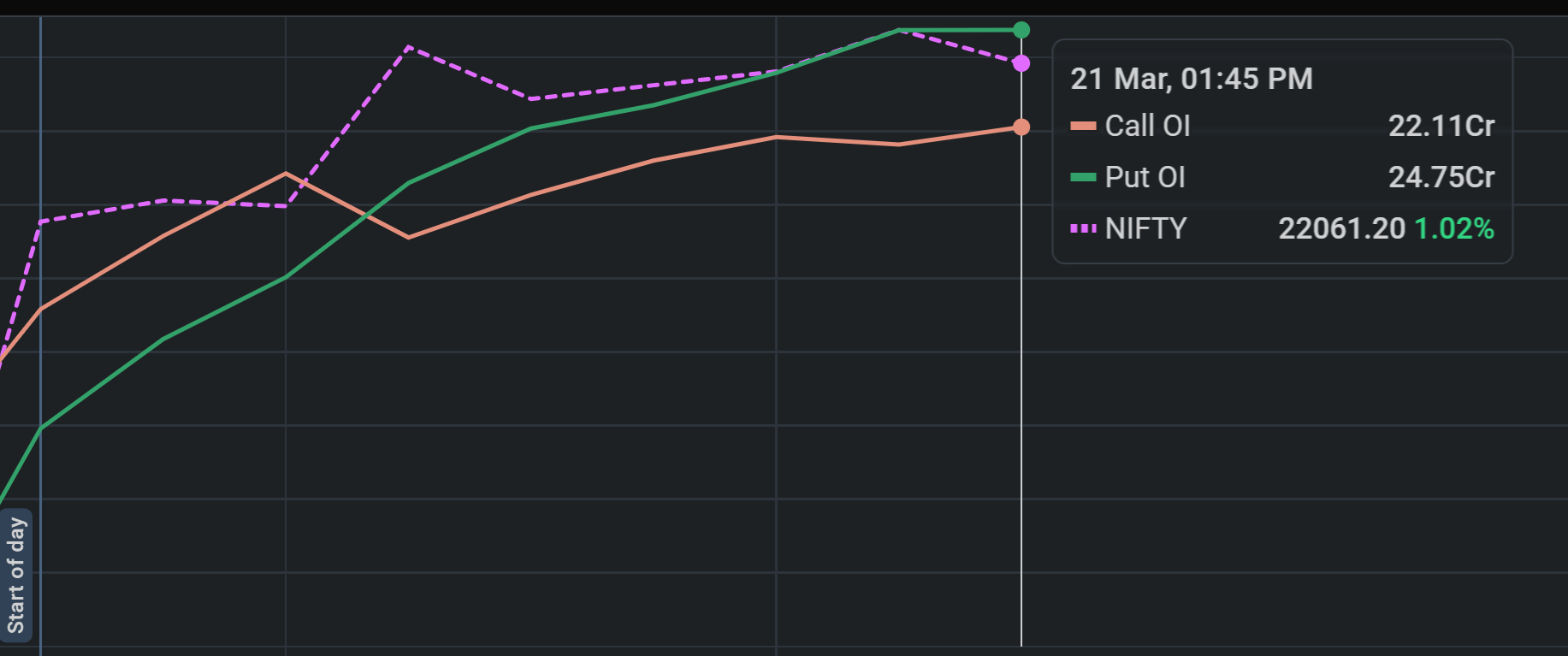
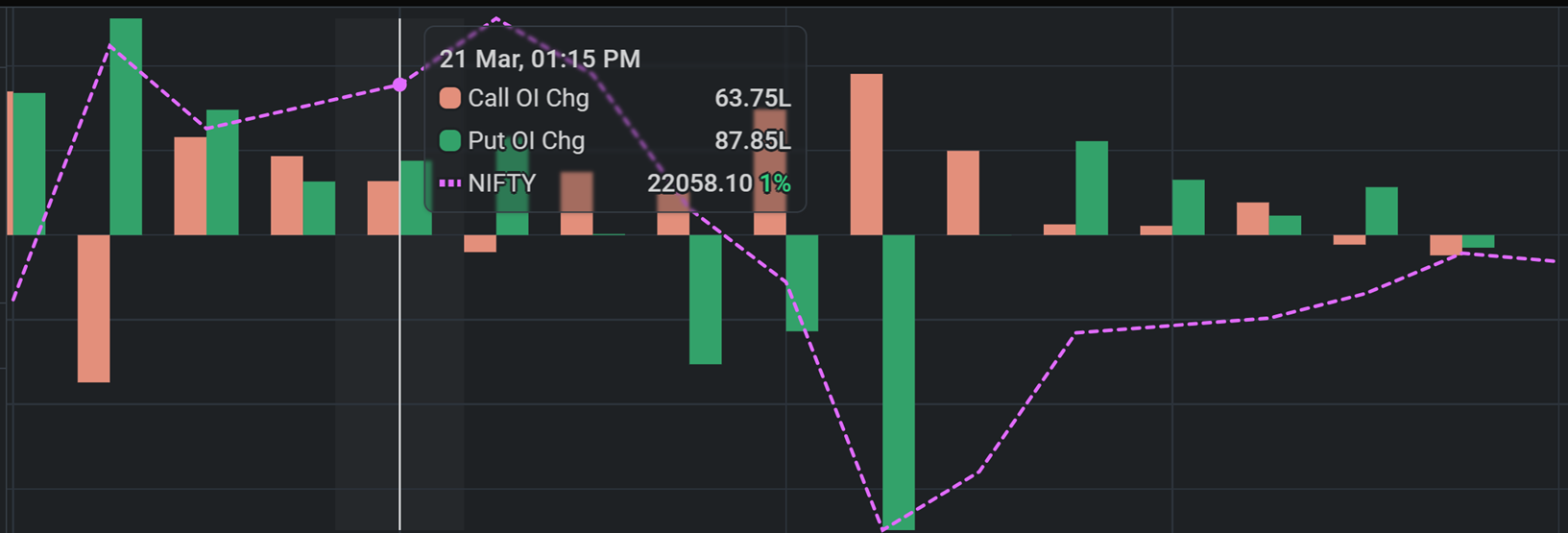
Check how Open Interest change affects NIFTY rate
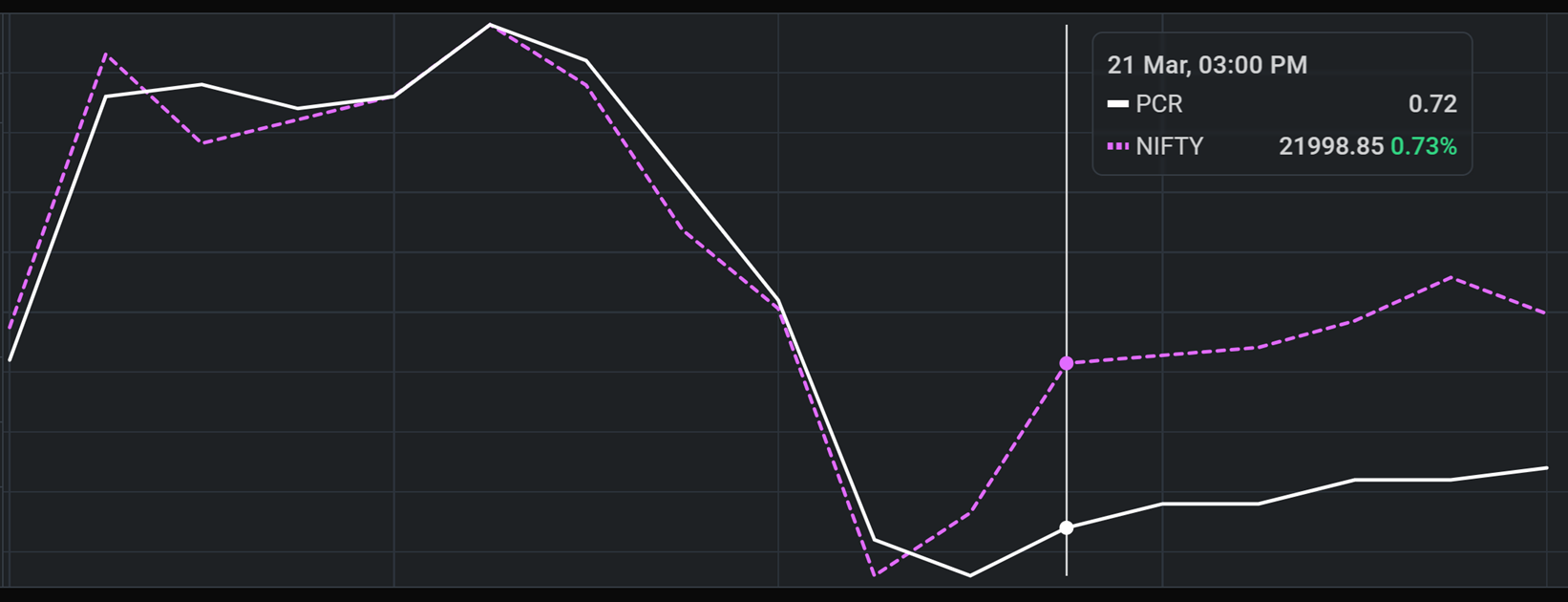
PCR effect
Open Interest Options cross using 21 Mar
Open Interest Options using 28 Mar (next week)

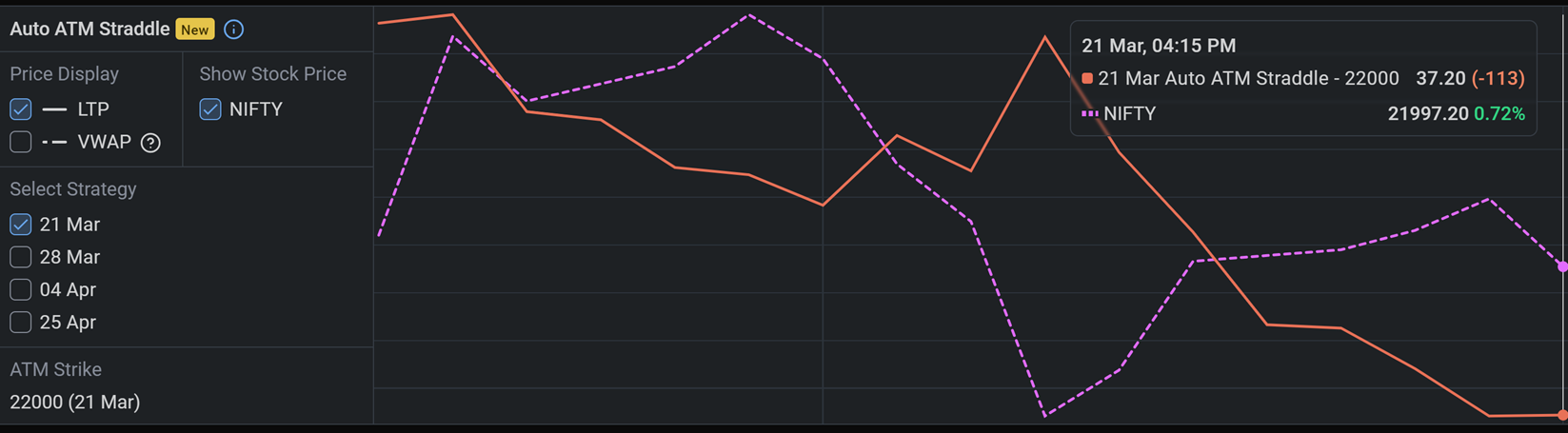
Auto ATM straddle 22000 21 Mar. it works in opposite direction to the nifty curve
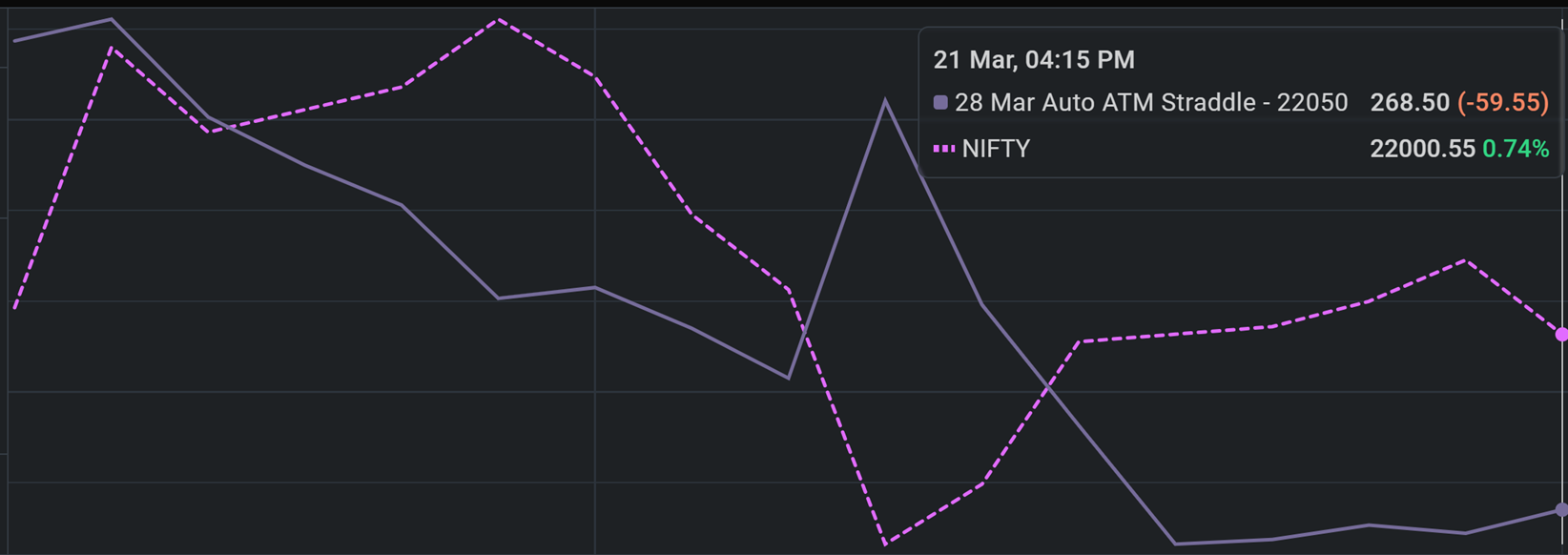
Auto ATM straddle 22050 28 Mar (next week) it also works in opposite direction to the nifty curve
Open Interest Options using 28 Mar (next week)
After doish comment from fed
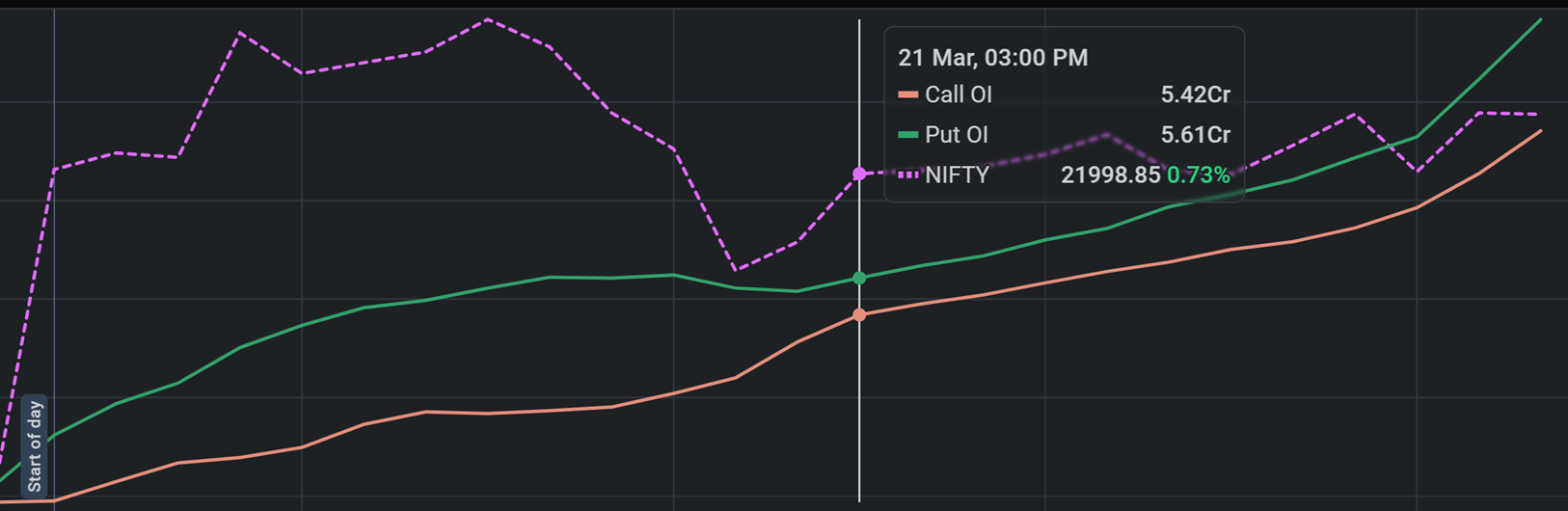
Open Interest Change Options using 28 Mar (next week)

Put call ratio

a straddle uses a call and put with the same strike price and expiration date,
while a strangle uses a call and put with the same expiration date but different strike prices
In a straddle trade, the trader can either long (buy) both options (call and put) or short (sell) both options.
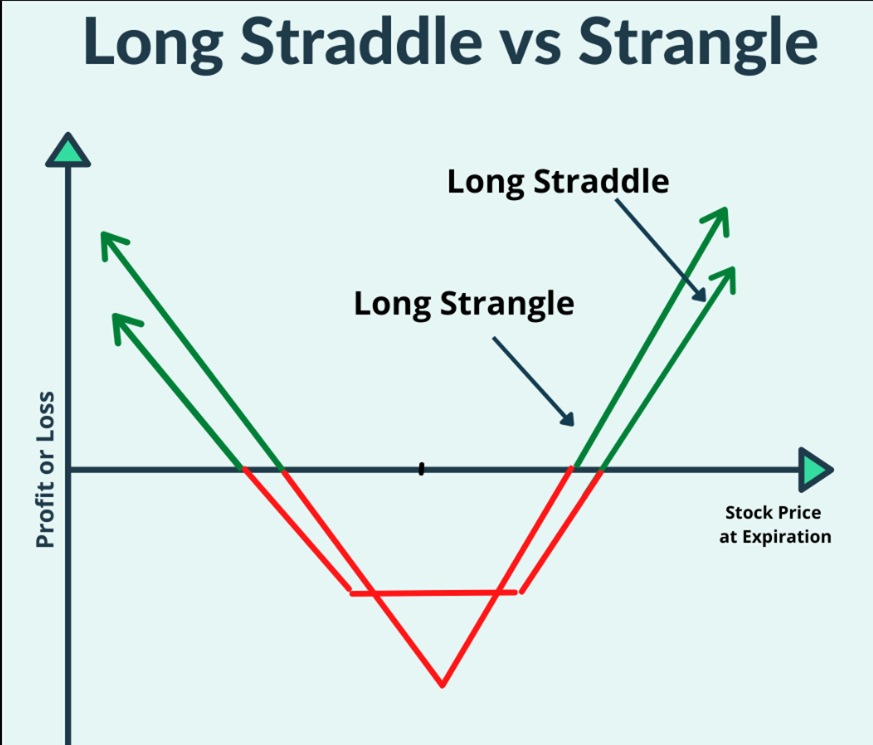

Open Interest change on Options
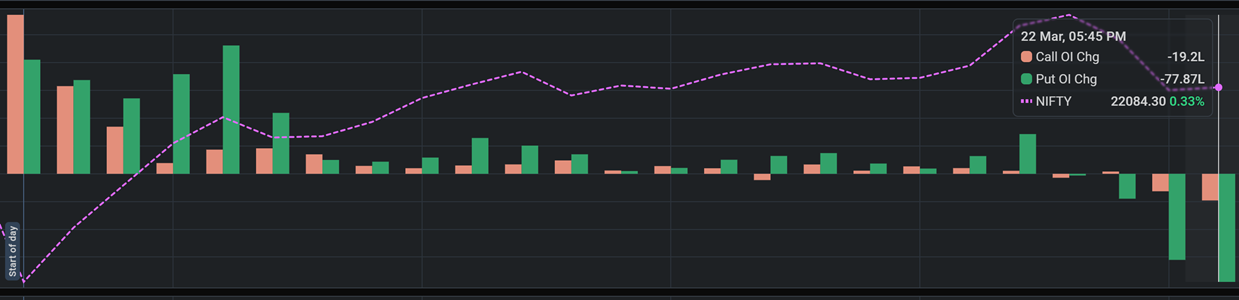
Put call Ratio

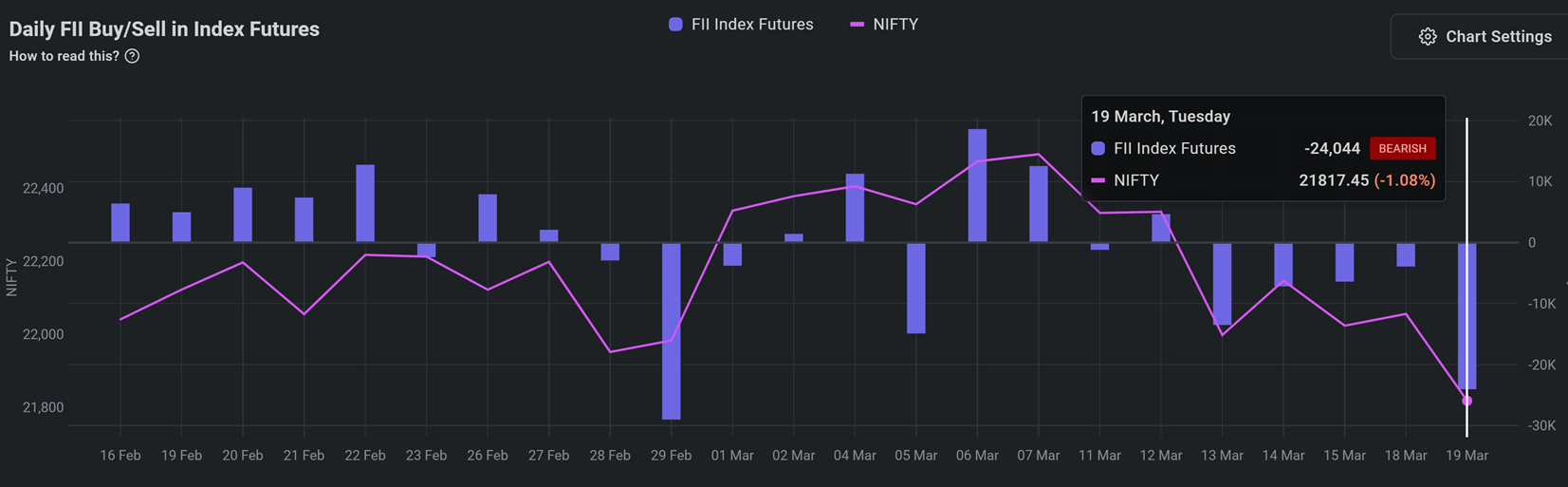
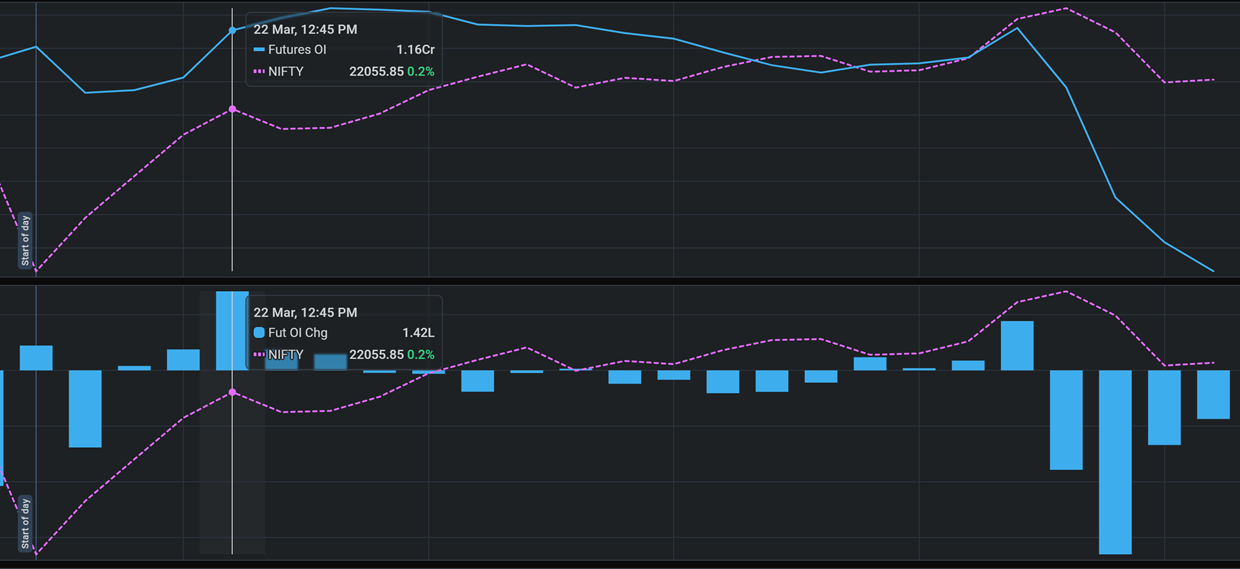
Open Interest change on Futures
Option IV
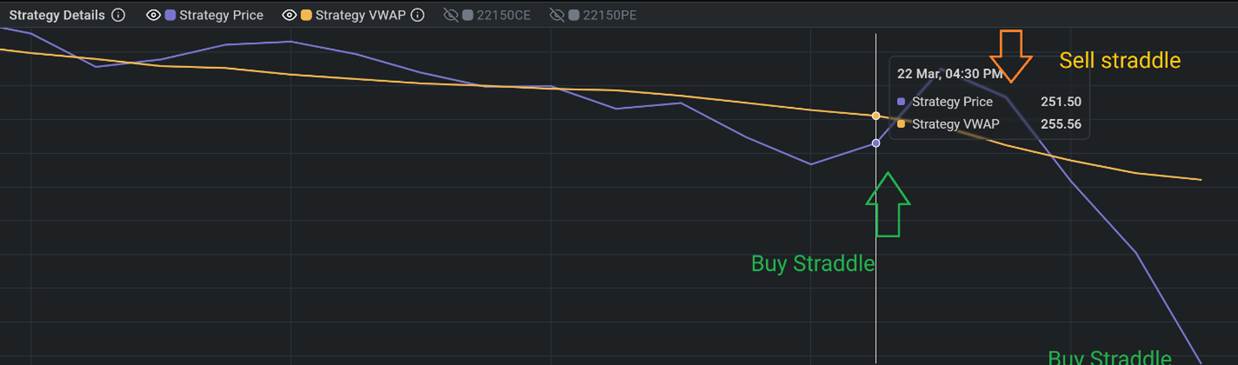
ATM straddle give more volatile

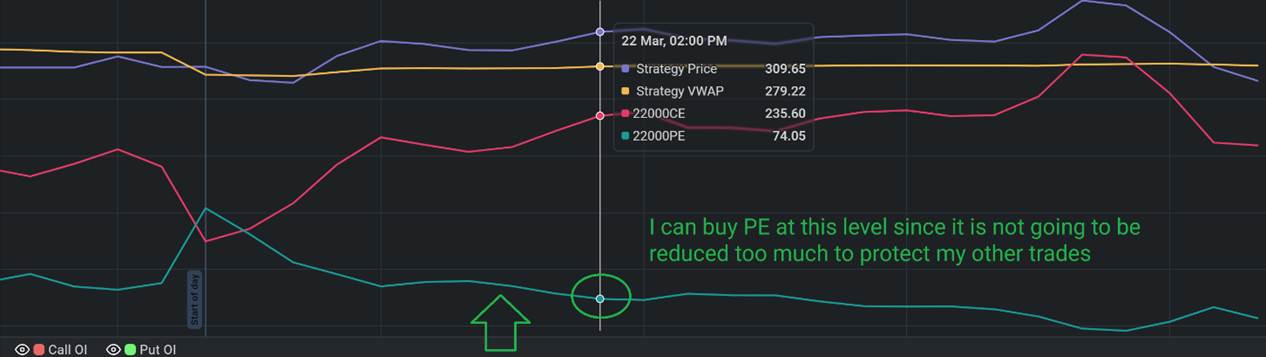
CE has more volatile but PE almost no impact
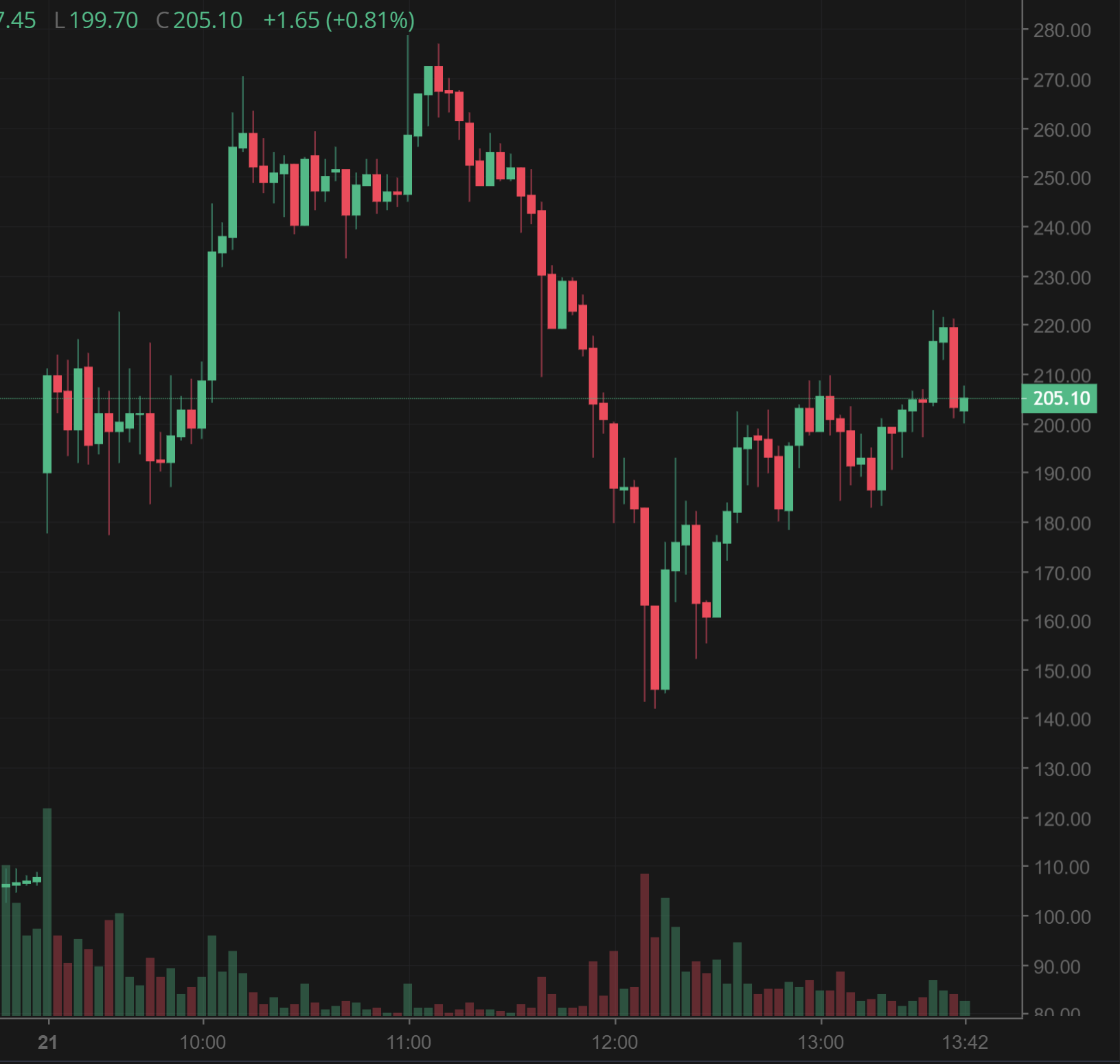
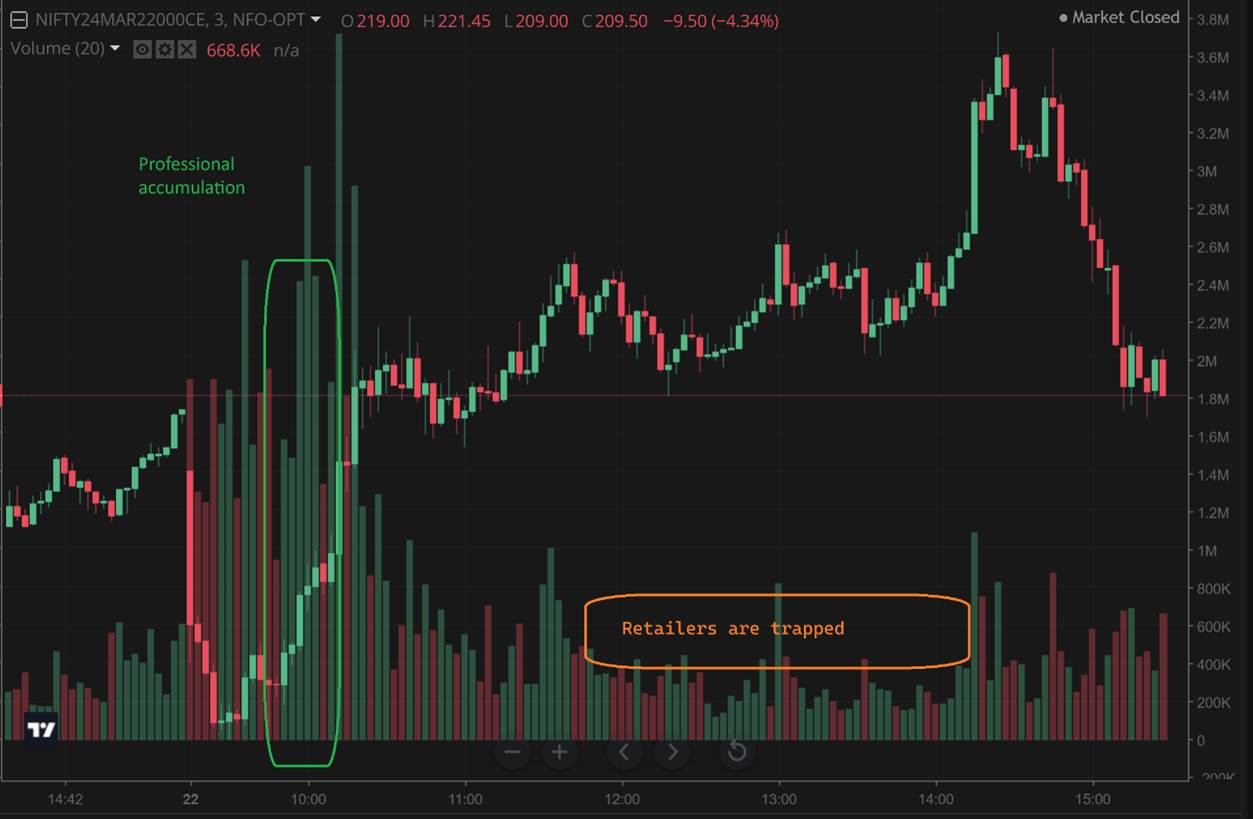
See the graph with volume
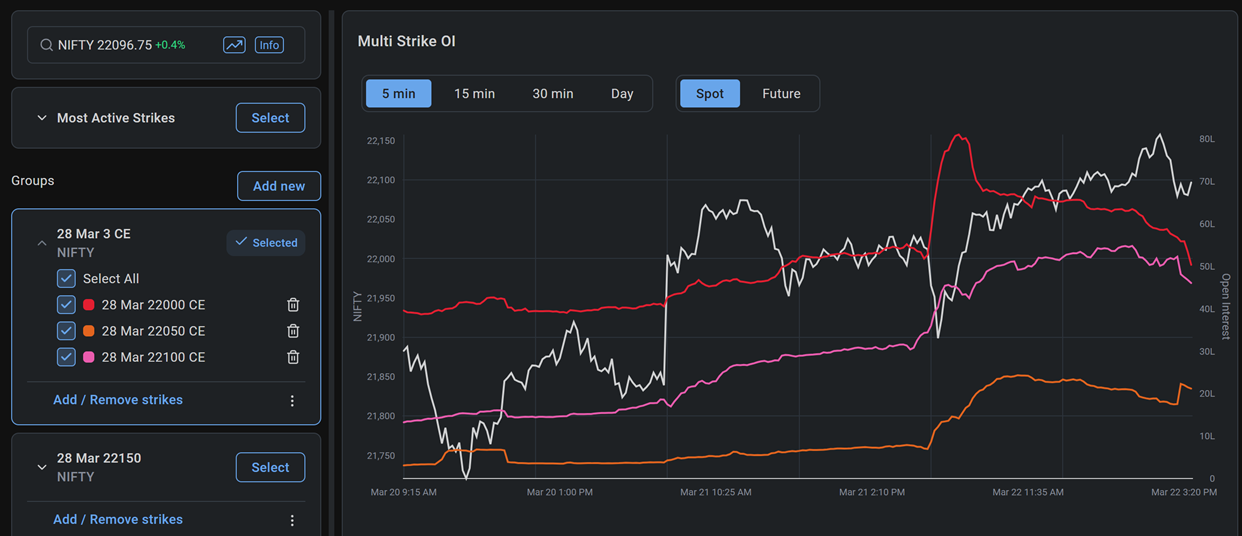
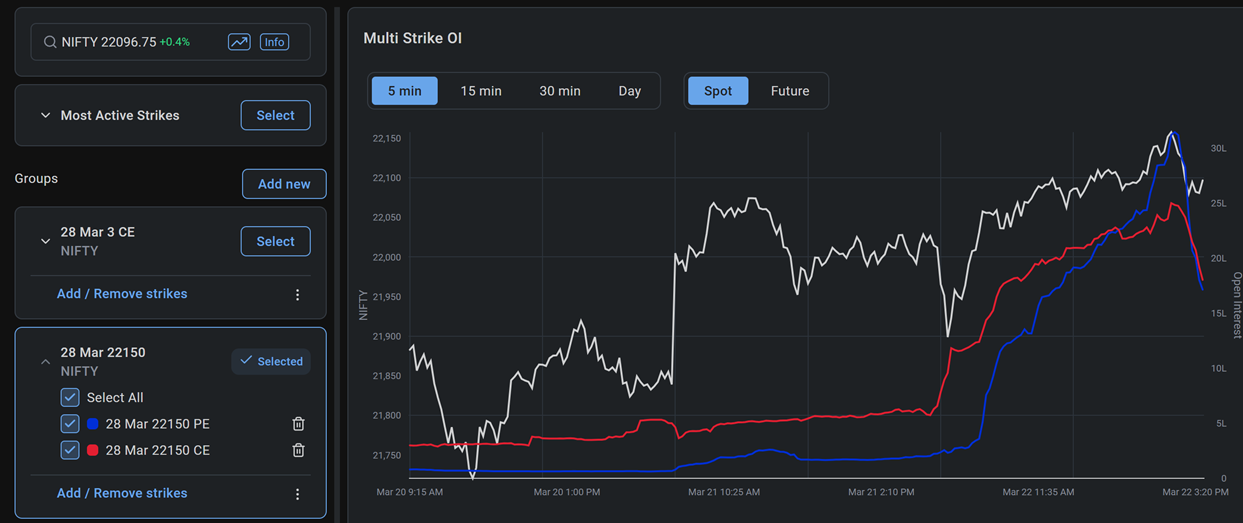
22000 ce sell @ 290 and after 1 hour buy @ 200
22000 pe sell @140 and after 1 hour buy @ 200


Margin needed 40k, to get profit of 5k within a month.Almost 12% profit easily.
I
could have avoided that buying of 2 hedgings 28 mar 21850 PE and 28 mar 22500
CE to maximise the profit
However it reduces the high risk in case sudden crash or sudden price up
I can buy these when the time is closer by or when the hedging too much cheaper
Now they are worth just 2.55 and .85 rupees only
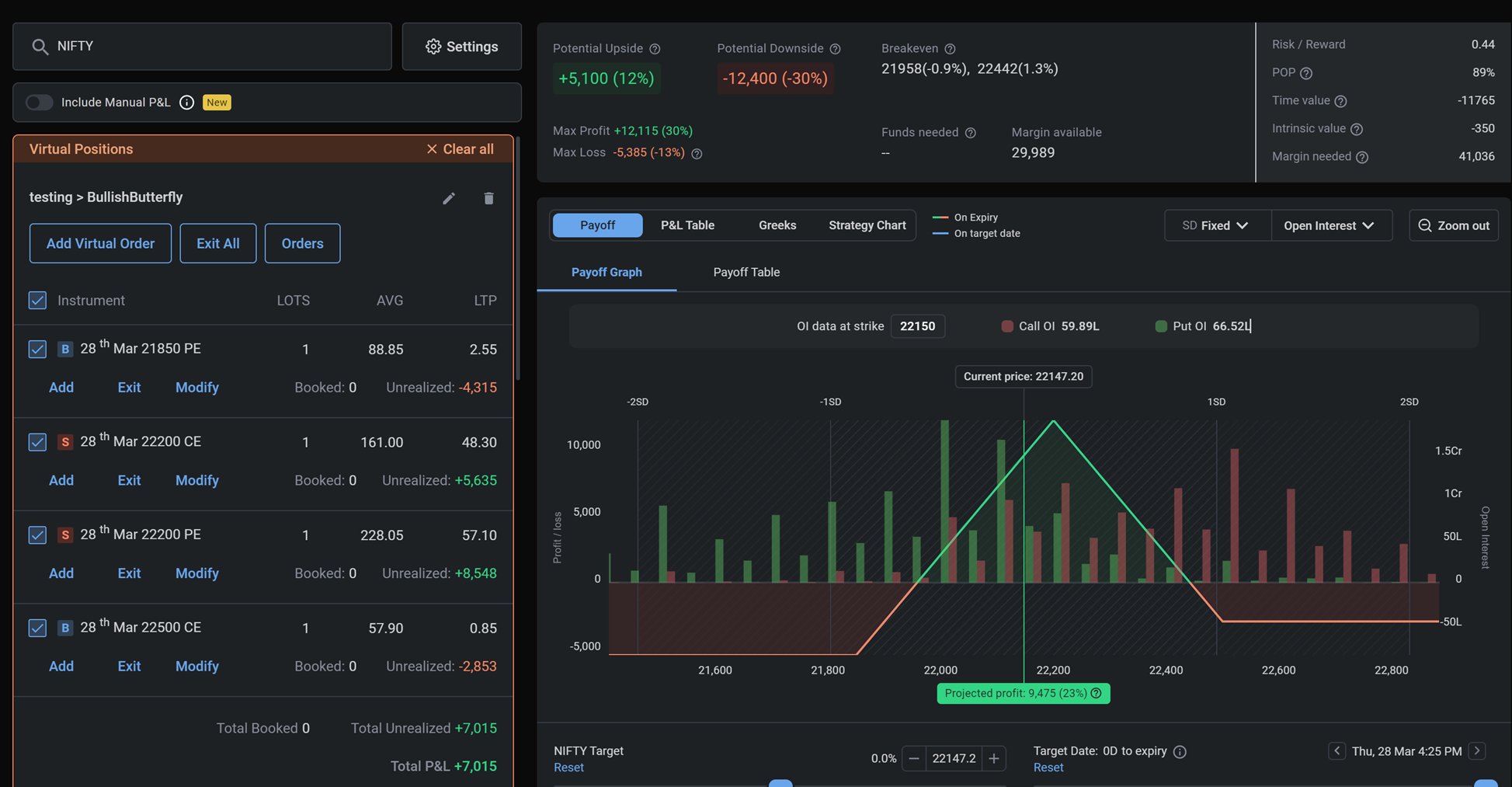
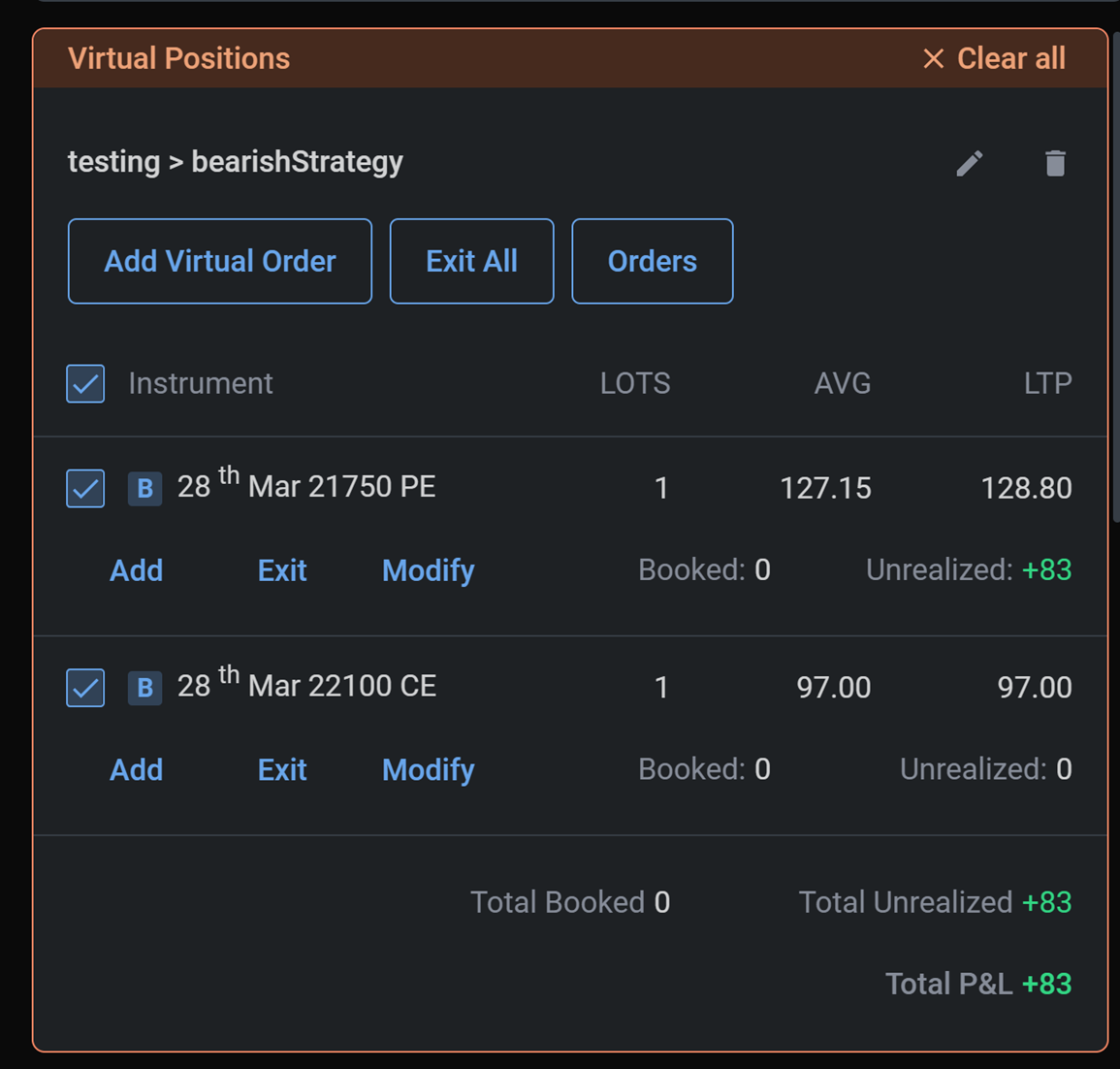
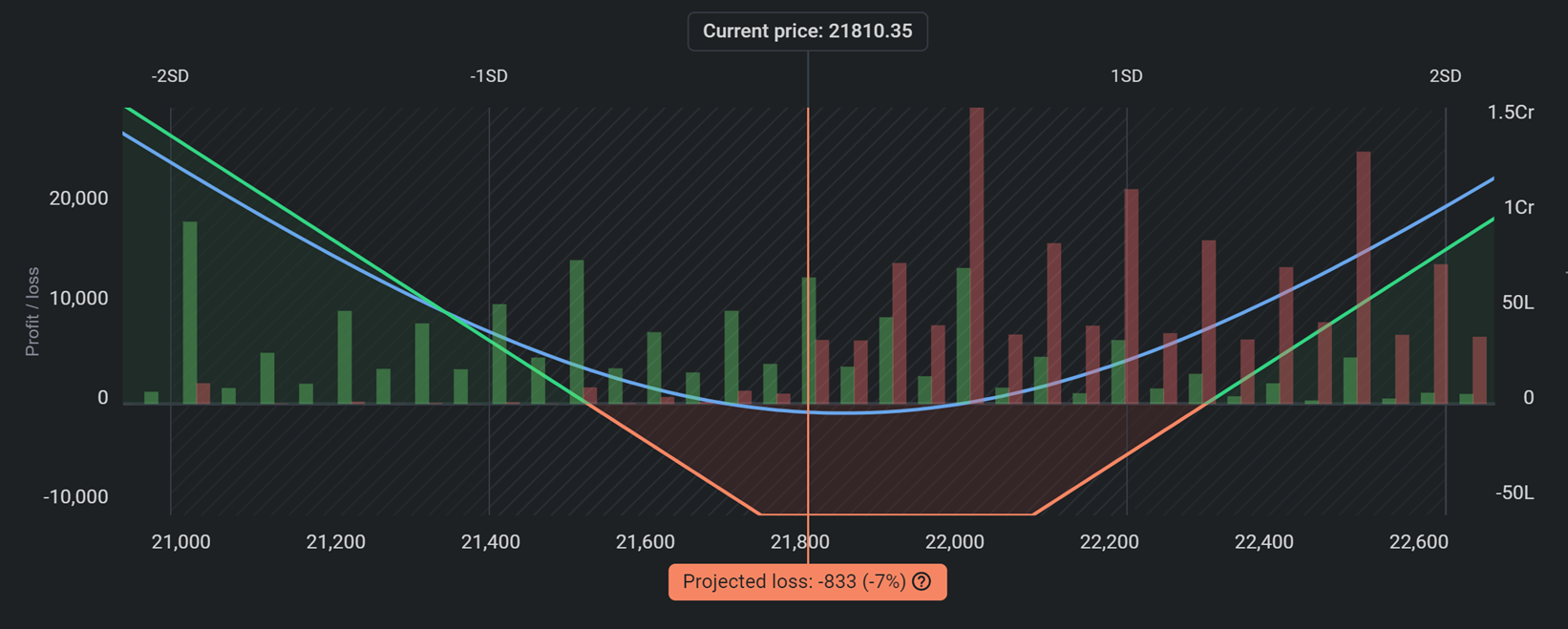
When nifty 22105

When nifty 21810
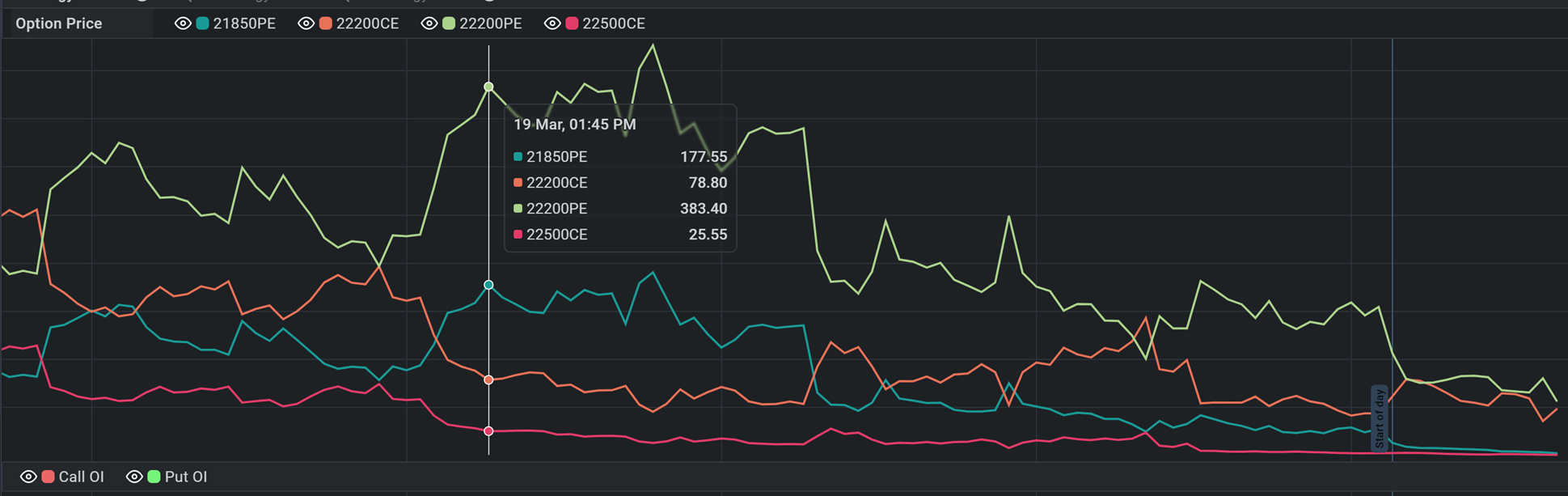
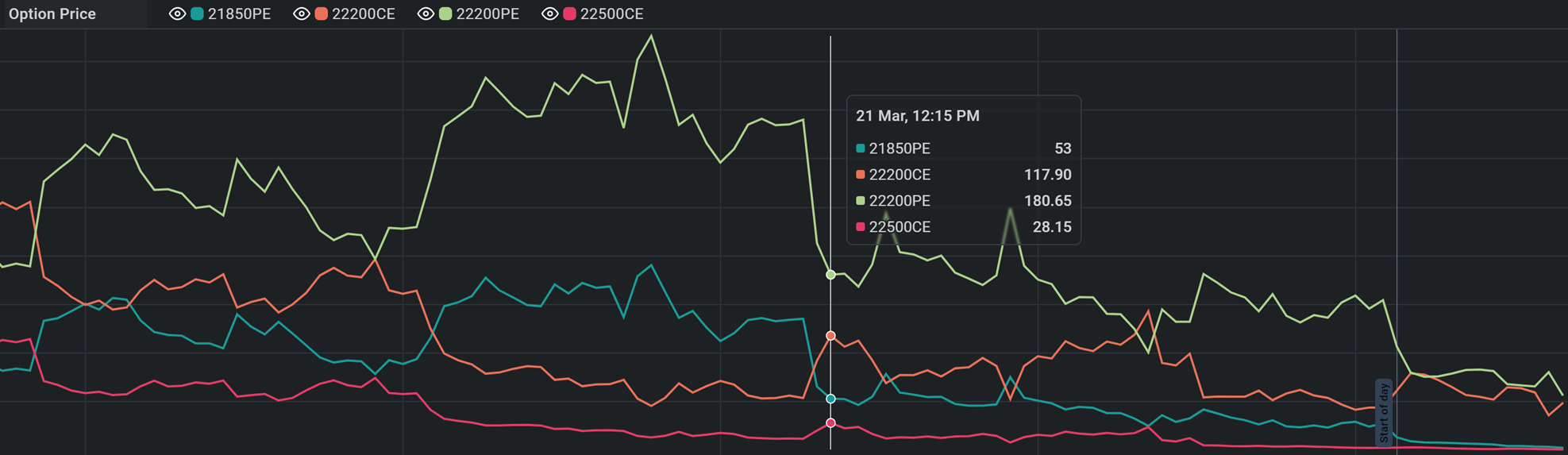
We can name this Bullish Butterfly Hacked
|
|
|
|
18-Mar |
|
19-Mar |
|
|
21-Mar |
|
|
|
|
21850 |
PE |
B |
-88 |
Sx2 |
177 |
89 |
B |
-53 |
124 |
|
Just look for cross |
|
22200 |
CE |
S |
161 |
Bx2 |
-78 |
83 |
S |
117 |
39 |
|
you can gain |
|
|
|
|
|
|
Profit |
172 |
|
Profit |
163 |
335 |
33500 profit |
|
22200 |
PE |
S |
228 |
B |
-383 |
-155 |
|
180 |
-203 |
|
|
|
22500 |
CE |
B |
-58 |
S |
25 |
-33 |
|
28 |
53 |
|
|
|
|
|
|
|
|
Risk |
-188 |
|
Risk |
-150 |
|
|
When nifty 22068

NIFTY2441022600CE Elder Ray Bull power and bear power
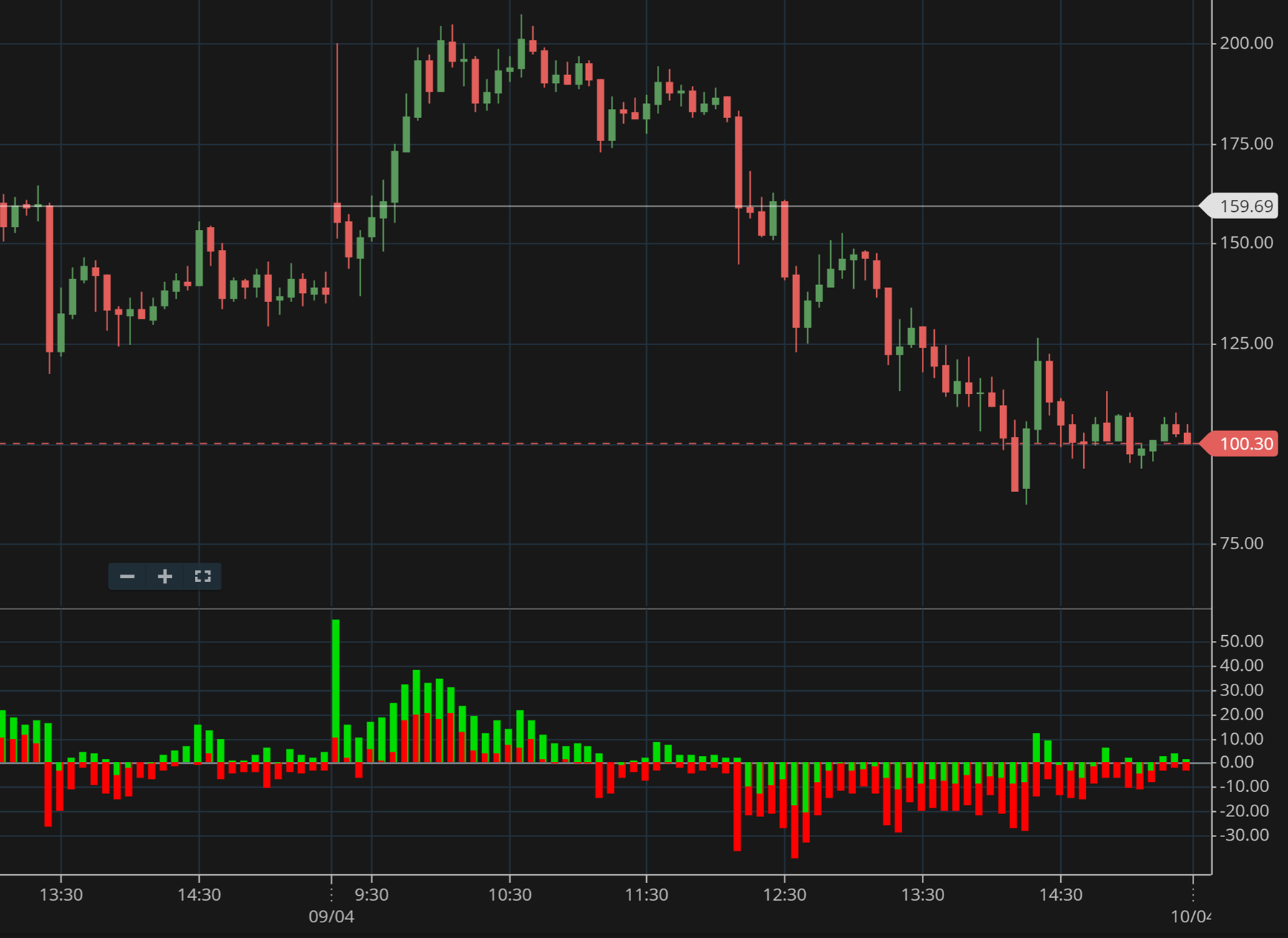
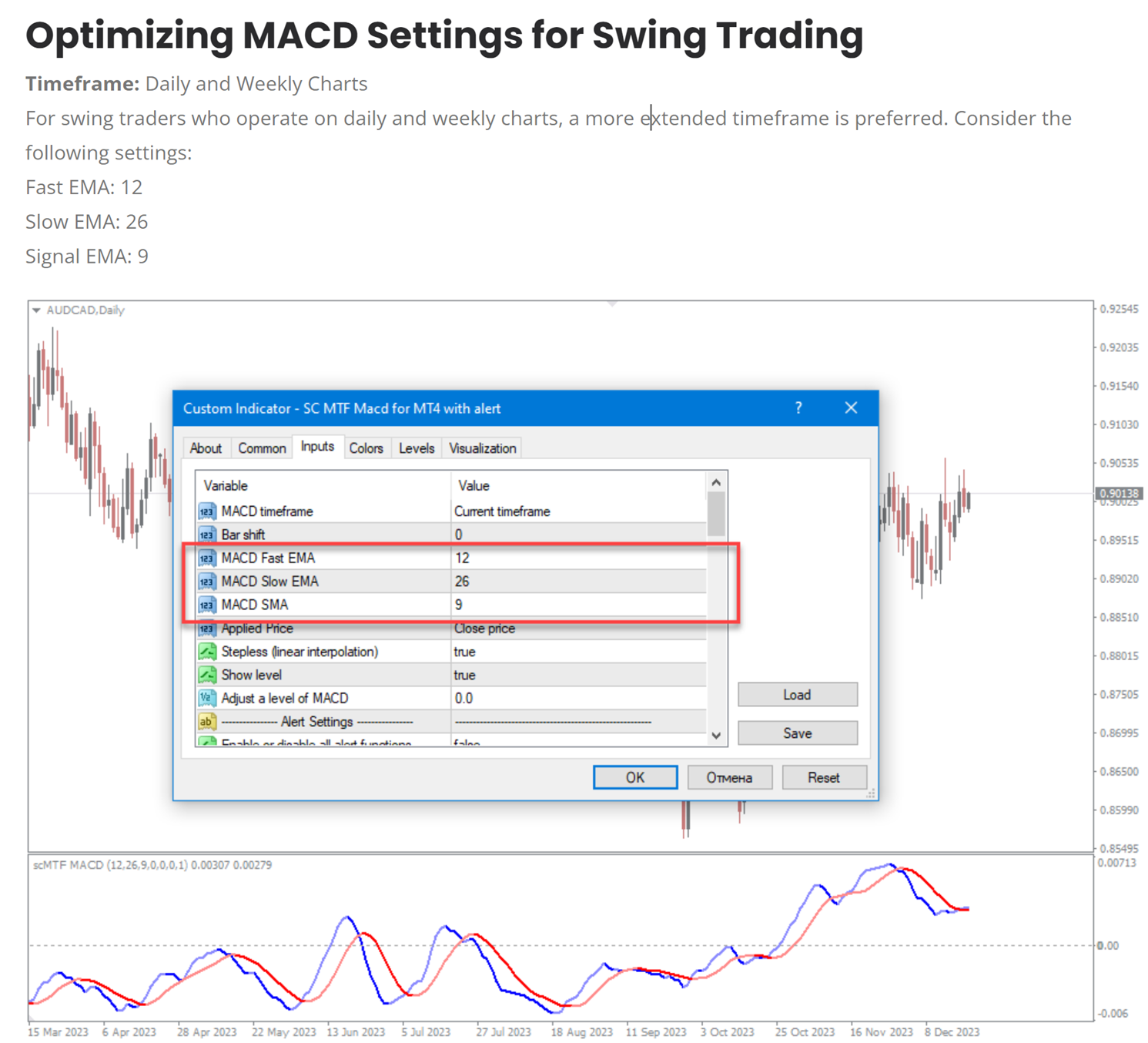
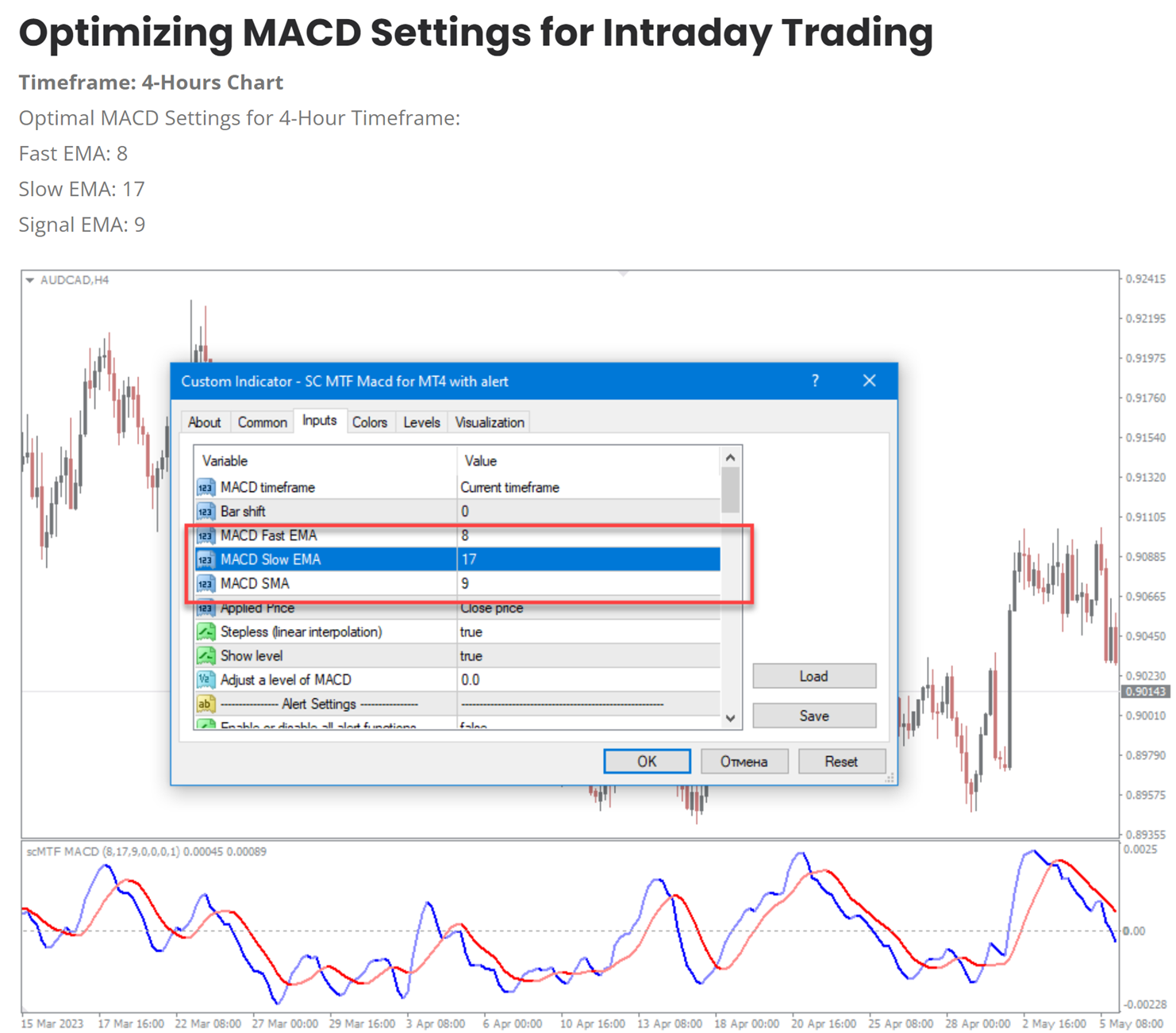
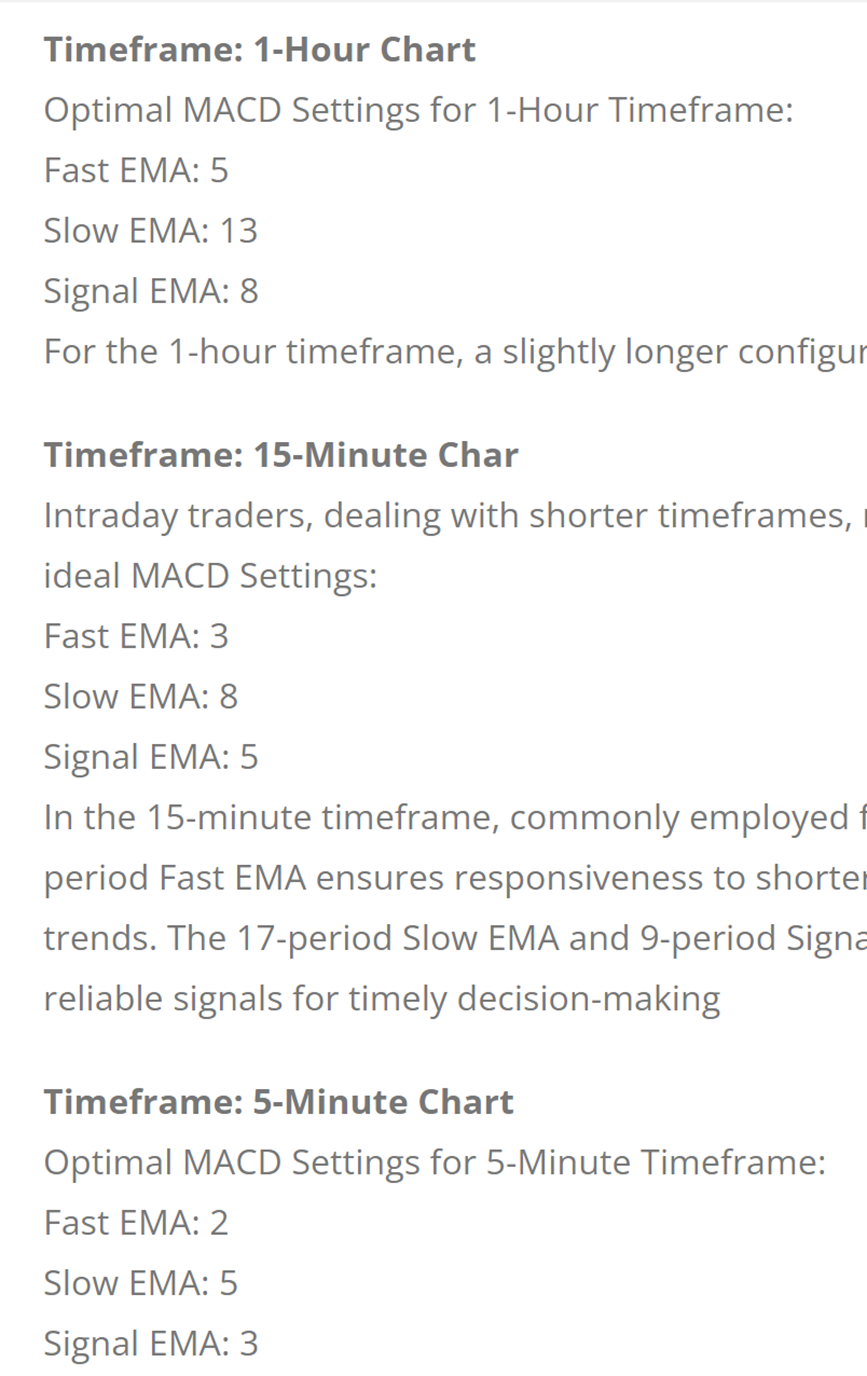
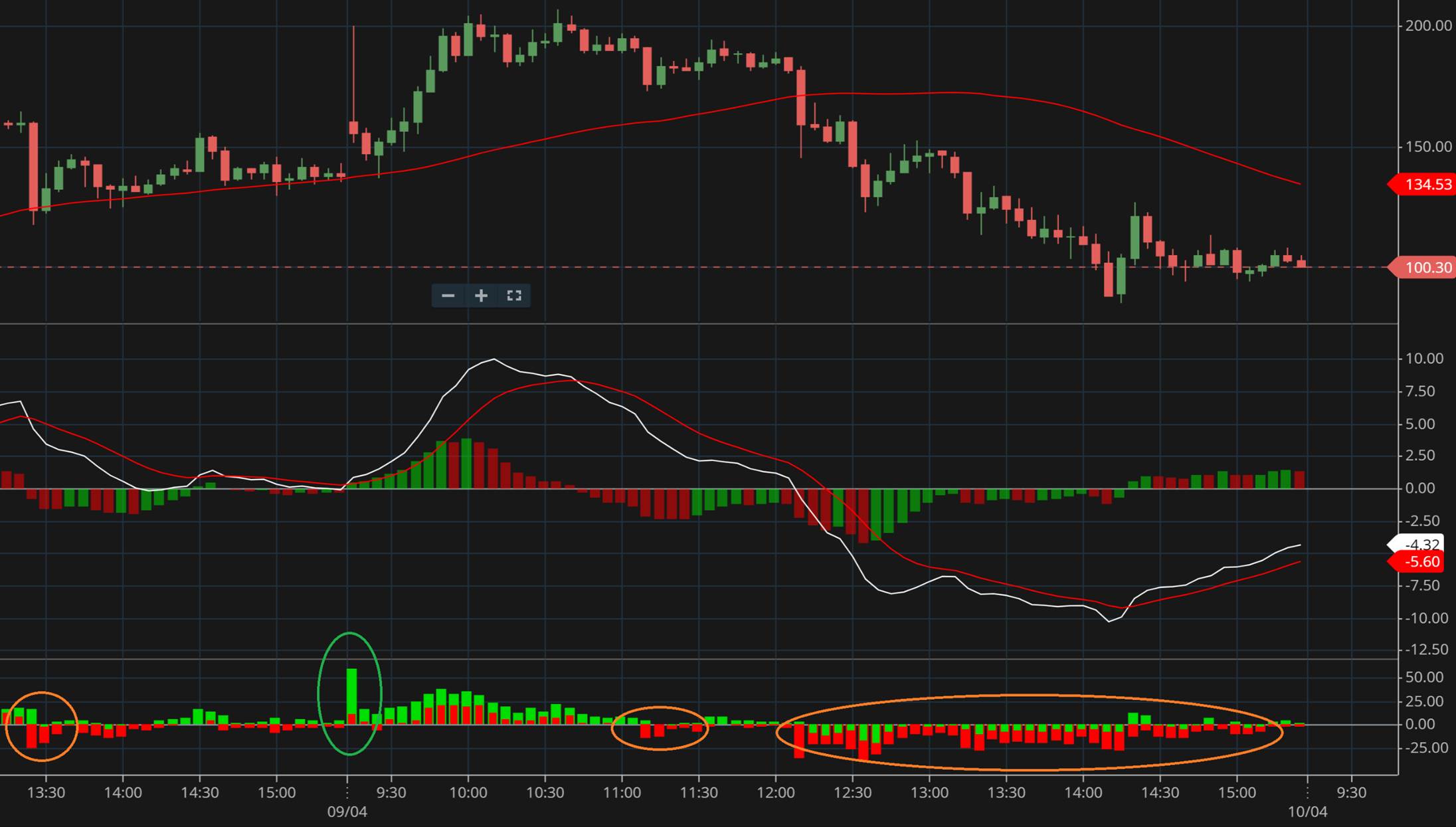
Top 10 MACD settings for effective trading
1. Standard (12, 26, 9): This is the default MACD setting and is widely used by traders. It’s a well-balanced setting that provides reliable signals in most markets.
2. Short-Term (5, 35, 5): This setting is suitable for aggressive traders who are willing to take on more risk for potentially greater rewards. It provides quicker signals but with increased potential for false positives.
3. Long-Term (19, 39, 9): If you’re a swing trader or prefer to hold onto your positions for longer, this setting may suit your trading style. It provides fewer signals, but they are usually more reliable.
4. Scalping (3, 10, 16): Ideal for scalpers and day traders, this setting provides fast signals. Remember, while it can lead to quick profits, the risk of false signals is also high.
5. Cryptocurrency (20, 50, 9): With cryptocurrencies gaining traction, this setting can be a great ally. Given the high volatility of the crypto market, these settings help balance out the noise.
6. Forex (8, 17, 9): For Forex traders, this setting has been found to be effective, considering the market’s 24-hour trading window and the associated volatility.
7. Conservative (24, 52, 18): For traders who prefer a slow and steady approach, these settings provide fewer but more reliable signals.
8. Trend-Following (7, 28, 7): Ideal for traders who love to ride trends, these settings help in identifying and staying with the trend.
9. Swing Trading (5, 15, 5): A perfect setting for swing traders, offering a good balance between signal frequency and reliability.
10.
Contrarian (15, 35,
5): For those who like to go against the trend, this setting can help
identify potential market reversals
BUY ON BUY SIGNAL ONLY IF MARKET IS IN UPTREND
ADD 200 day moving average

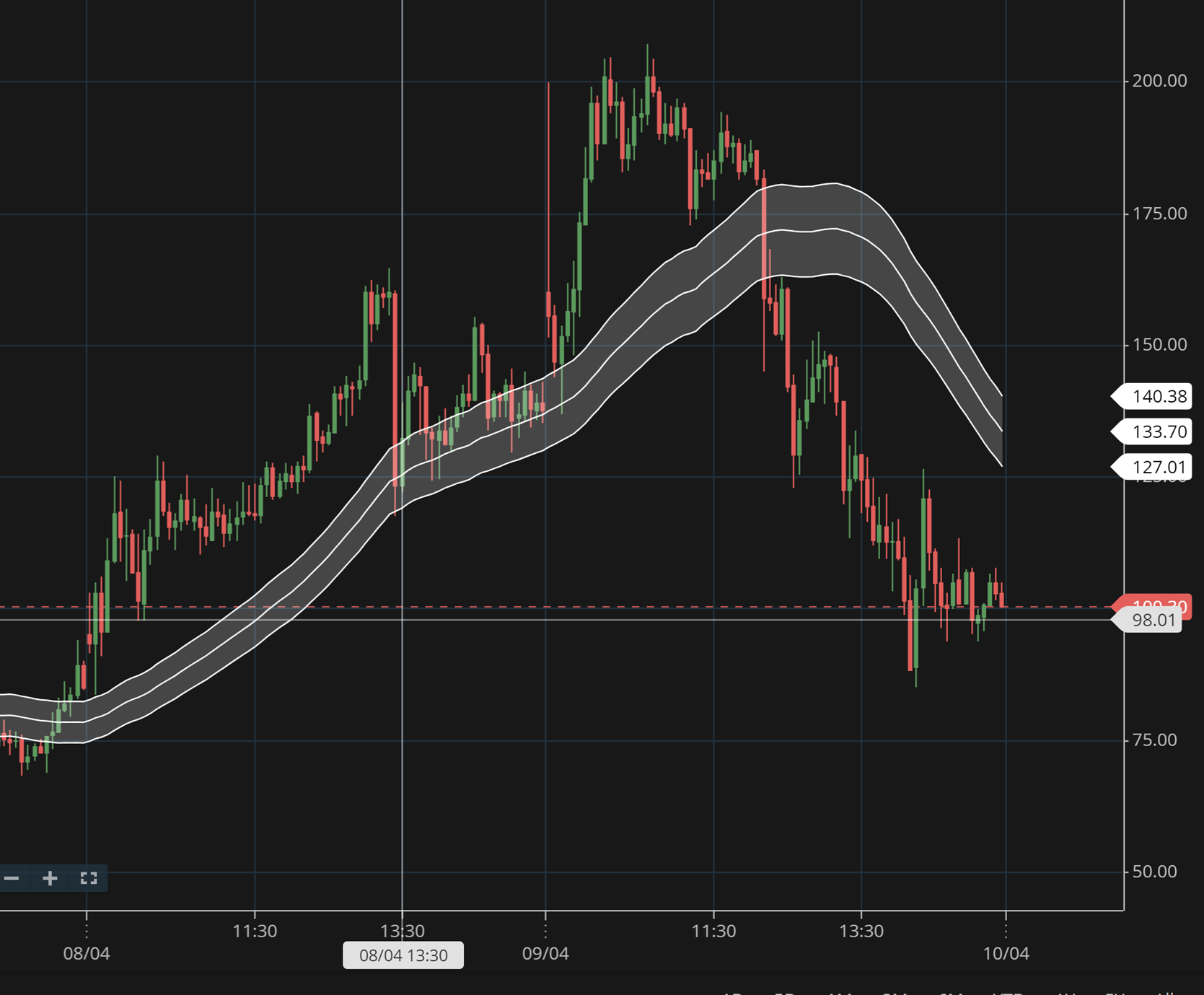
MA Envelope
Open interest
PMO 35 20 10 Overbought and Oversold

Pring KST


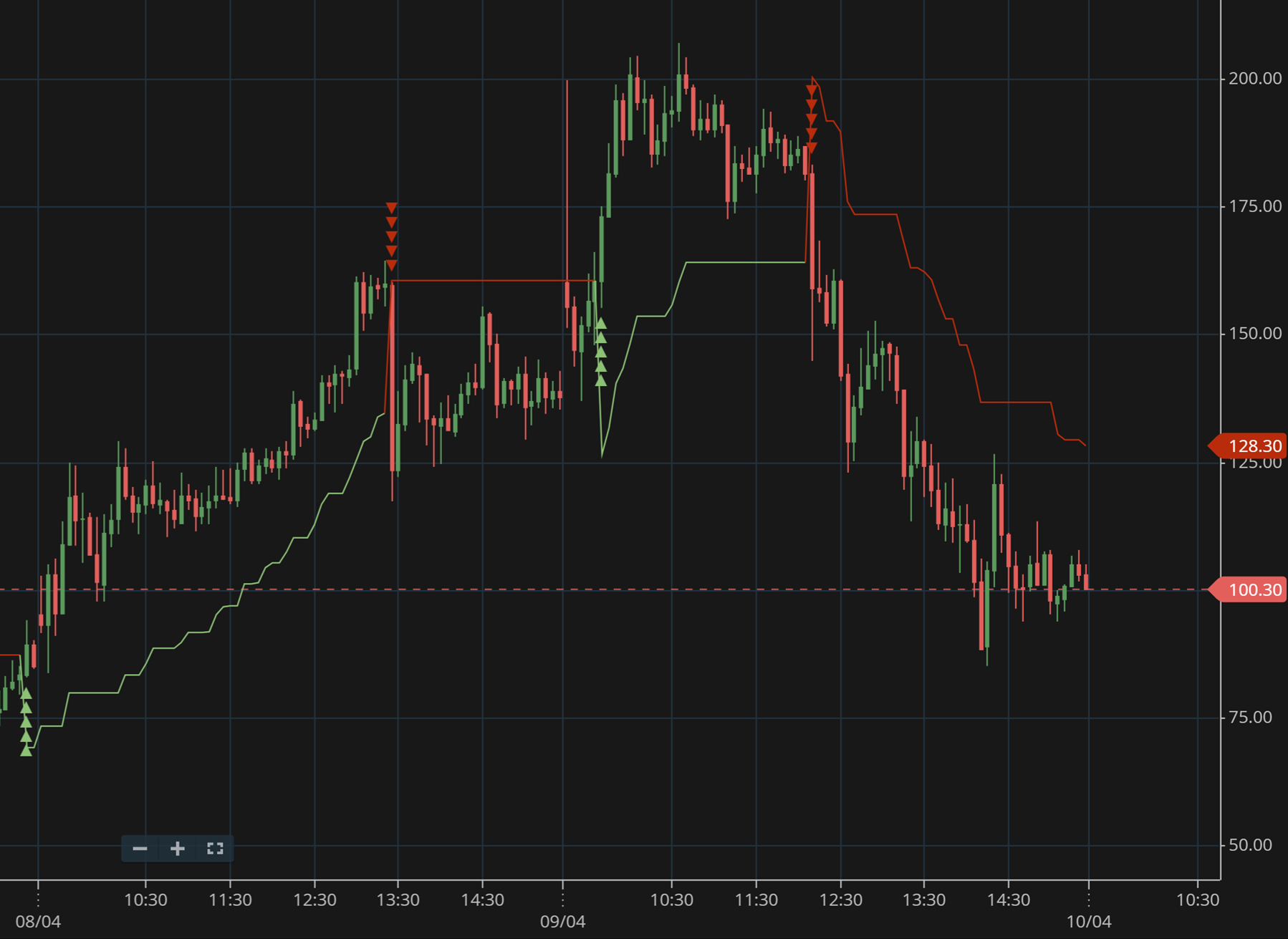
SuperTrend
VWAP

VOLUME CHART
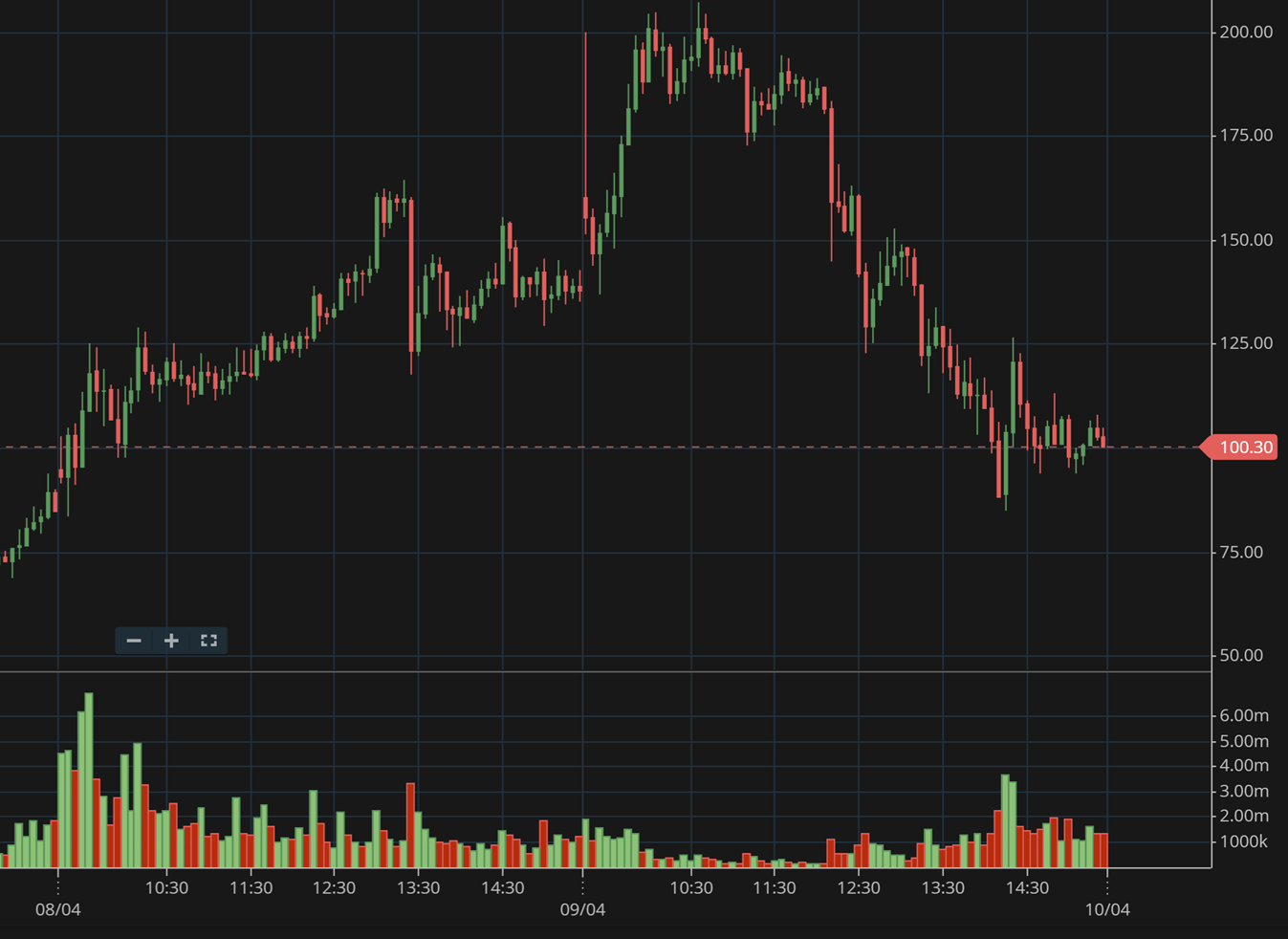

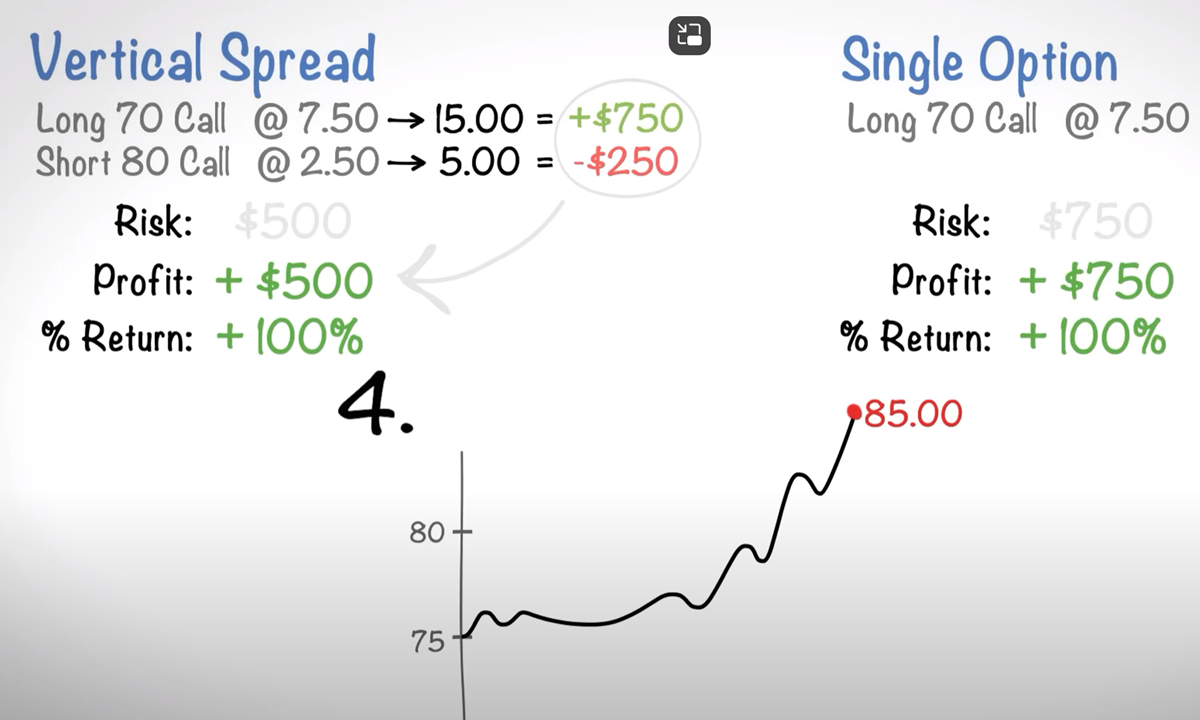

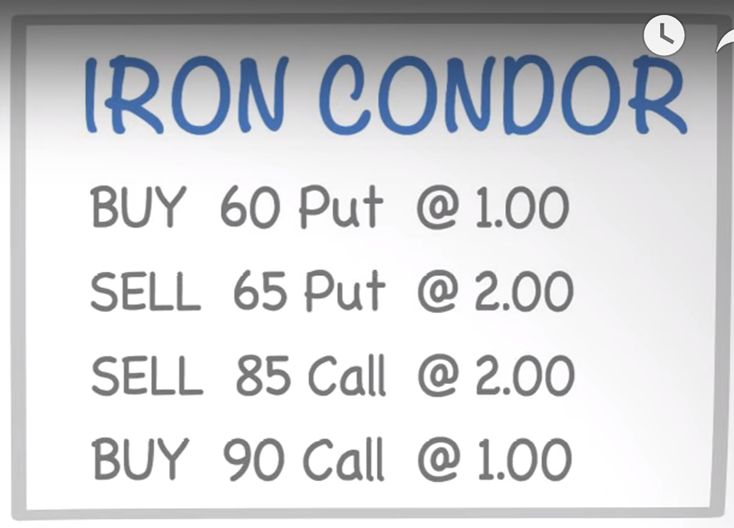
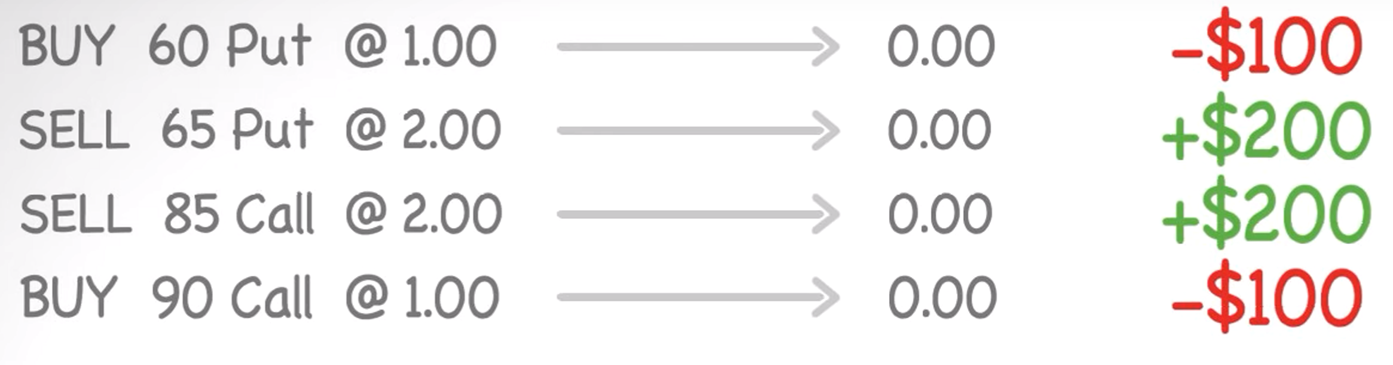
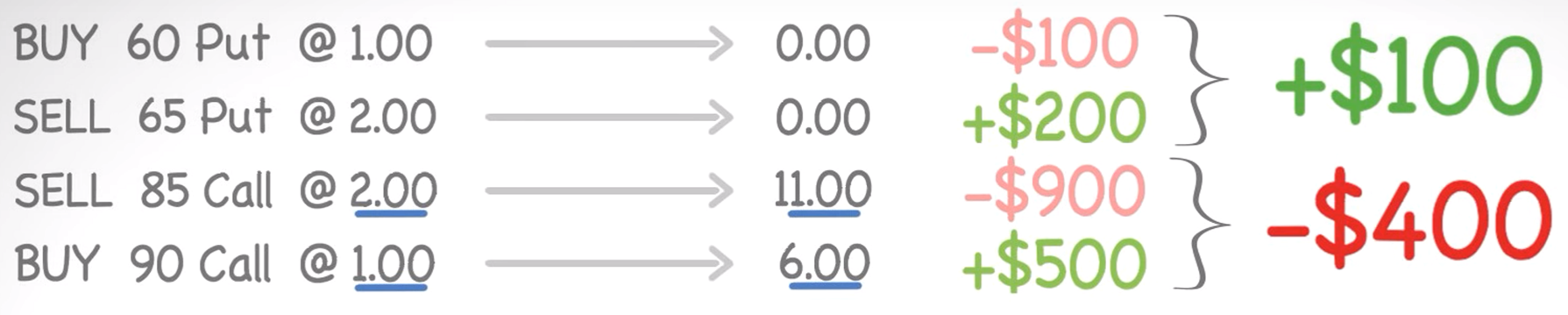
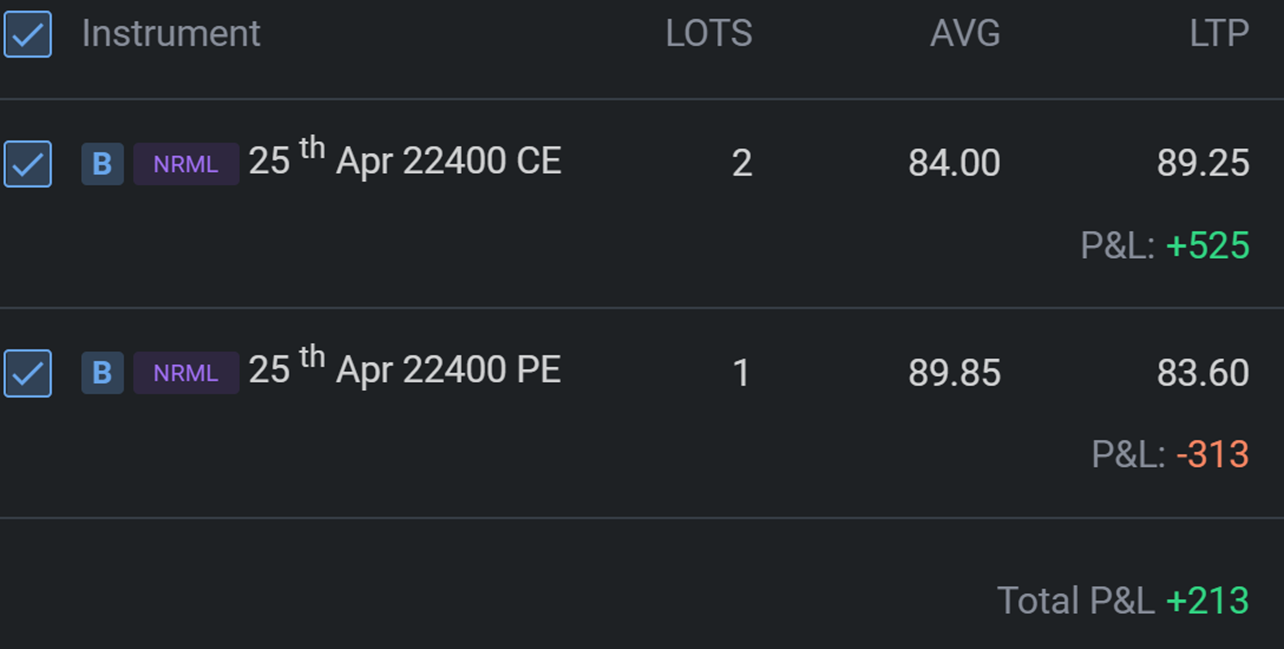
The following virtual trades are done on Monday 22 April 2024 and achieved profit in Tuesday 23 April 2024

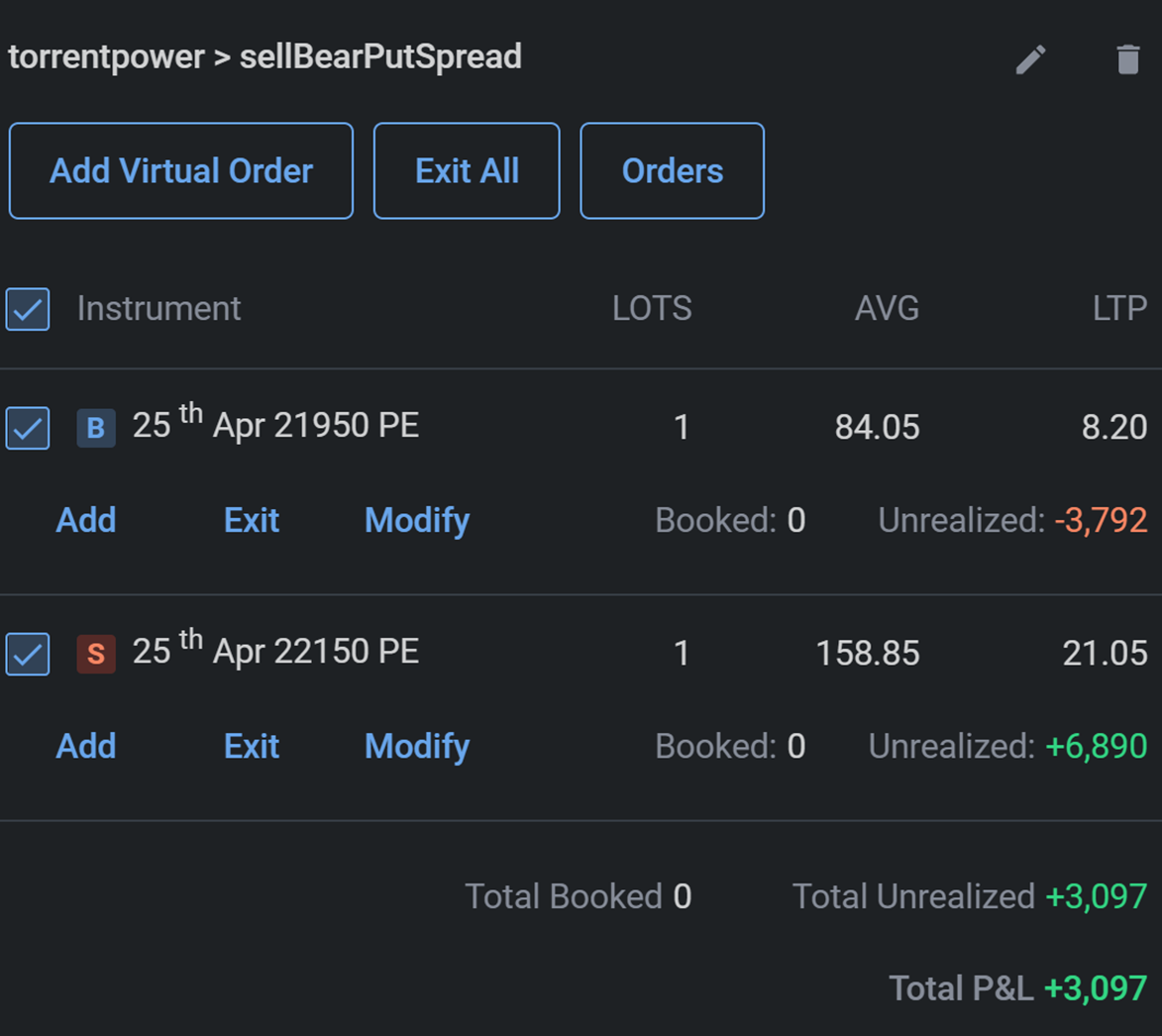
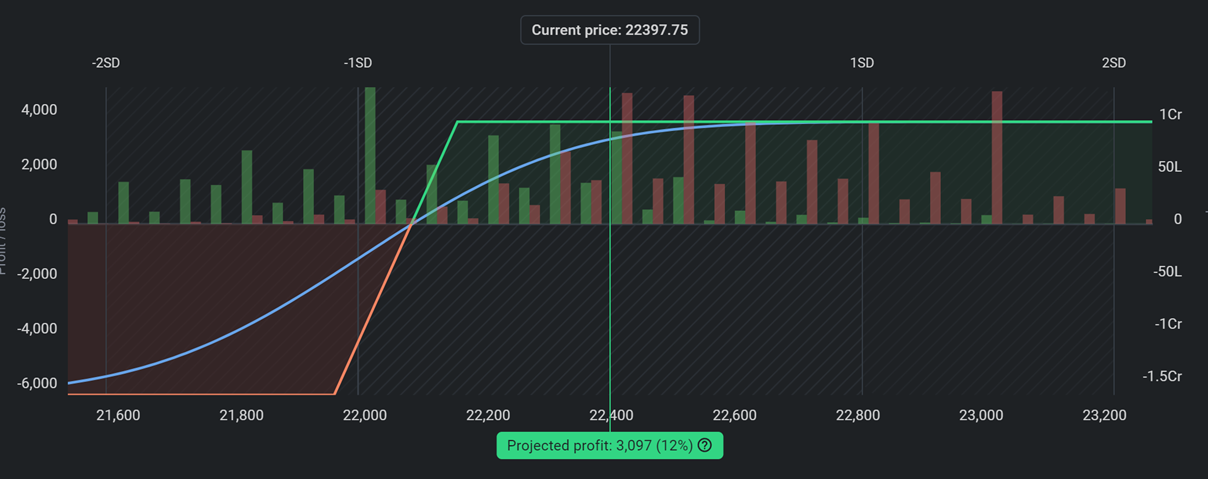

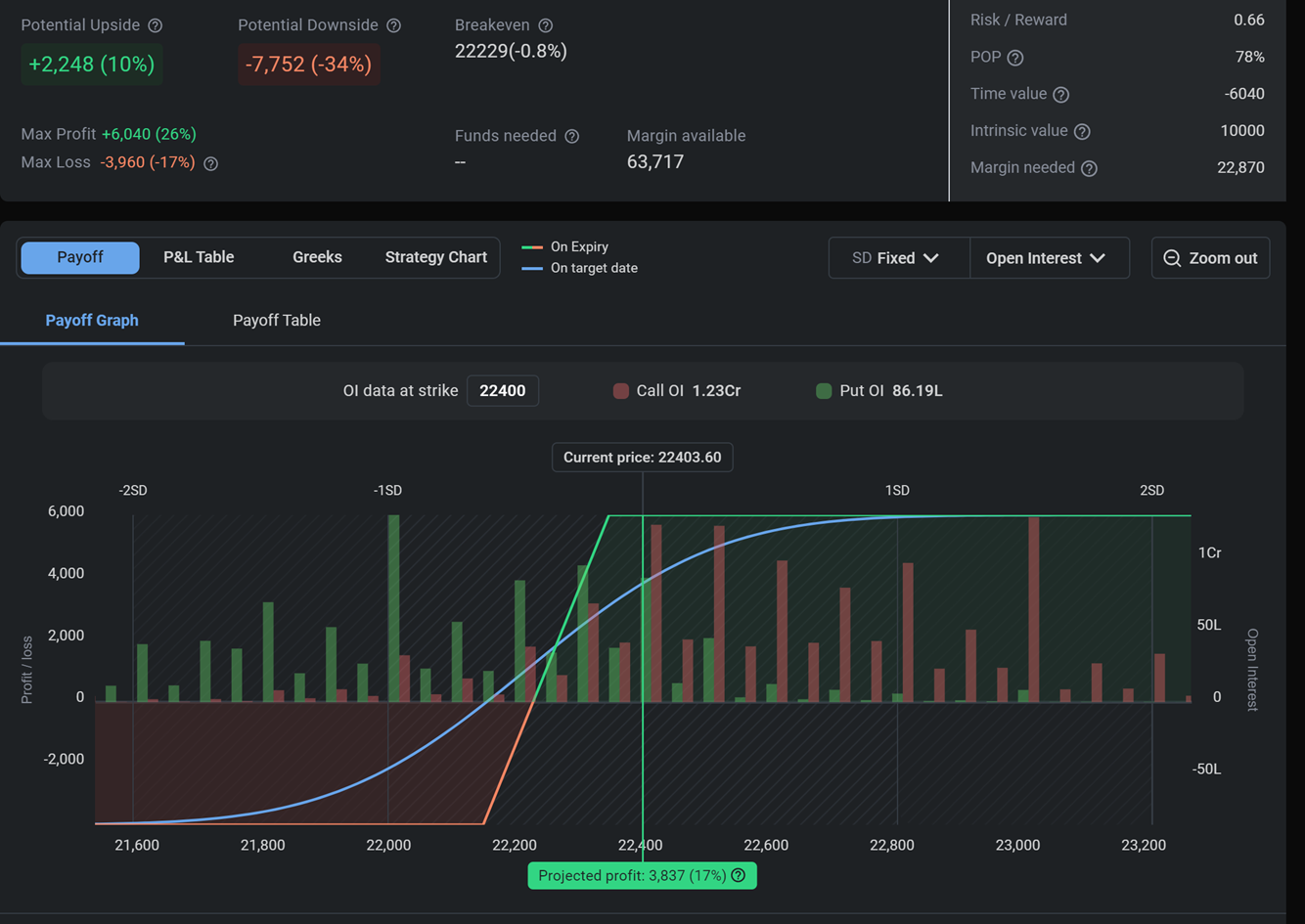
Trying Strap
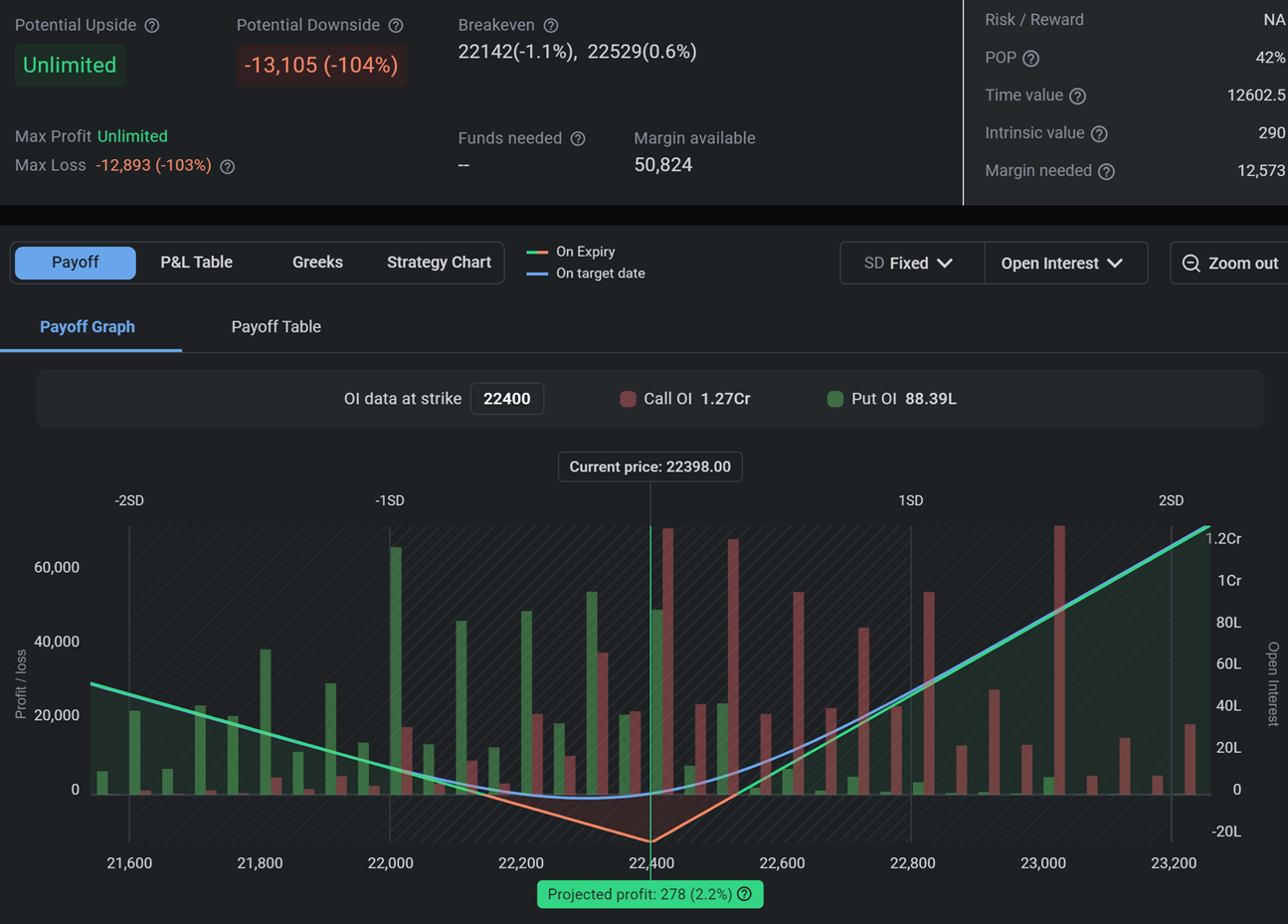
KLINKER indicator

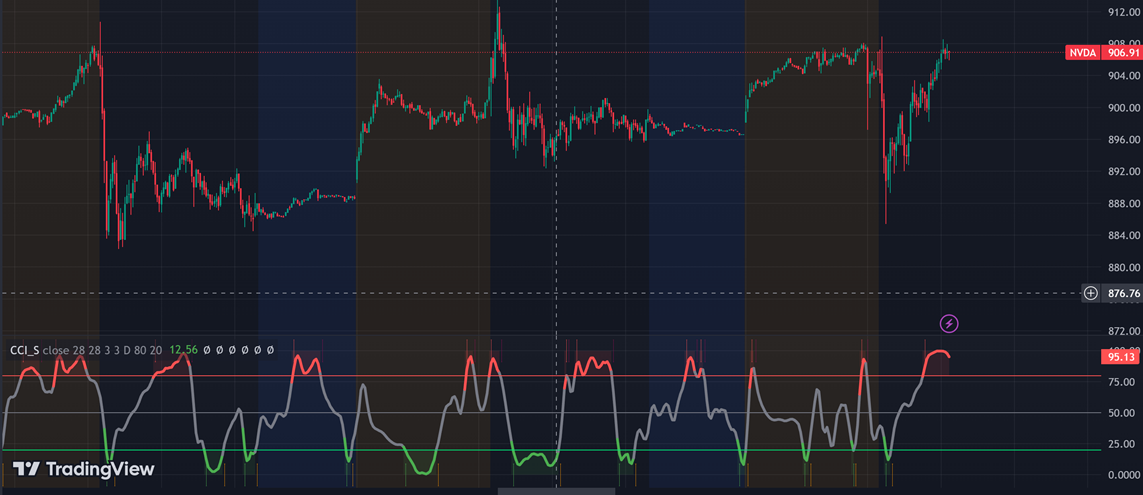
CCI indicator



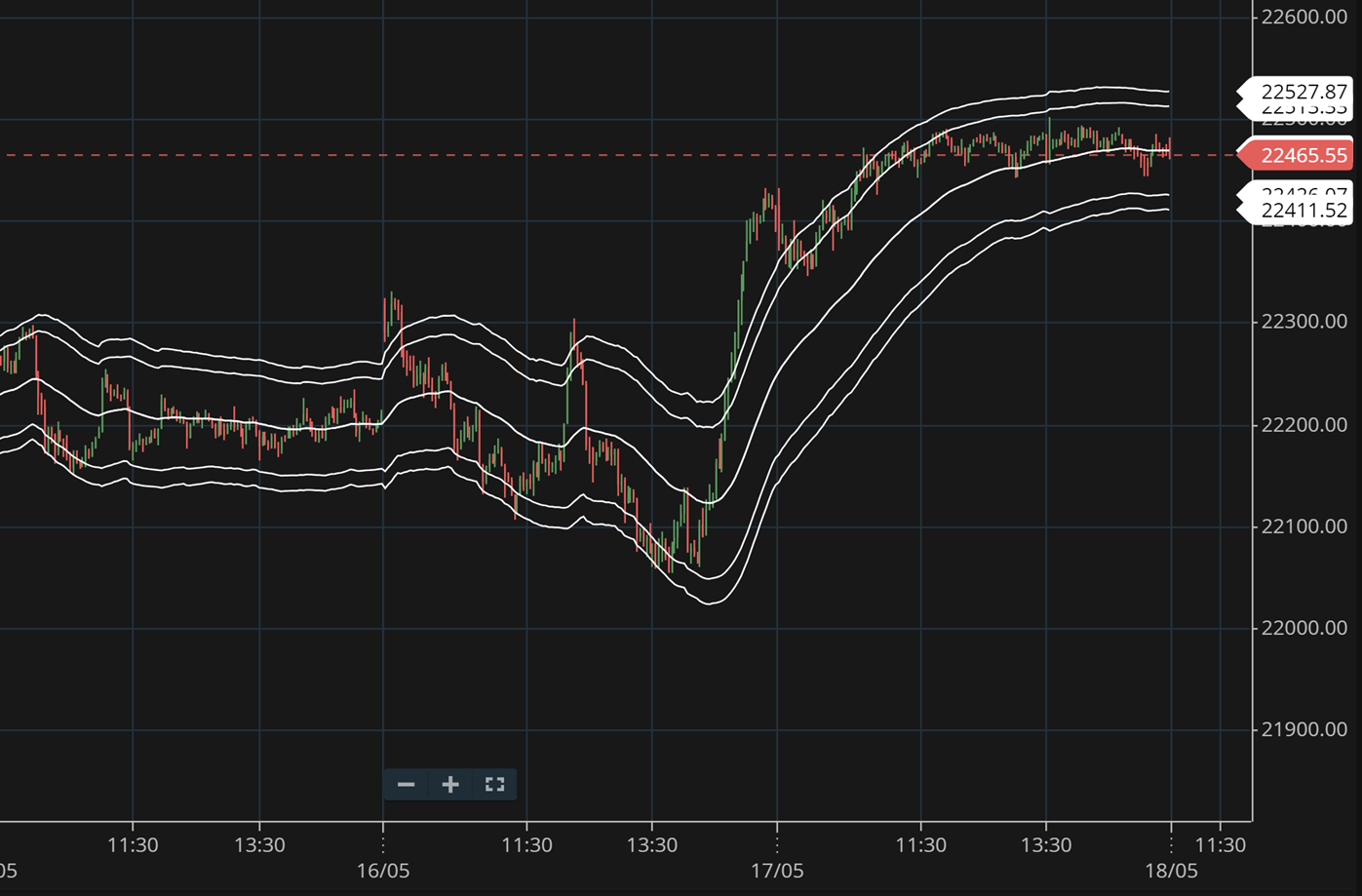
KELTNER CHANNEL (1) 50,3 (2) 50,4
Keltner Channel for SECRET scalping Strategy - English Subtitles - Tamil Audio (youtube.com)
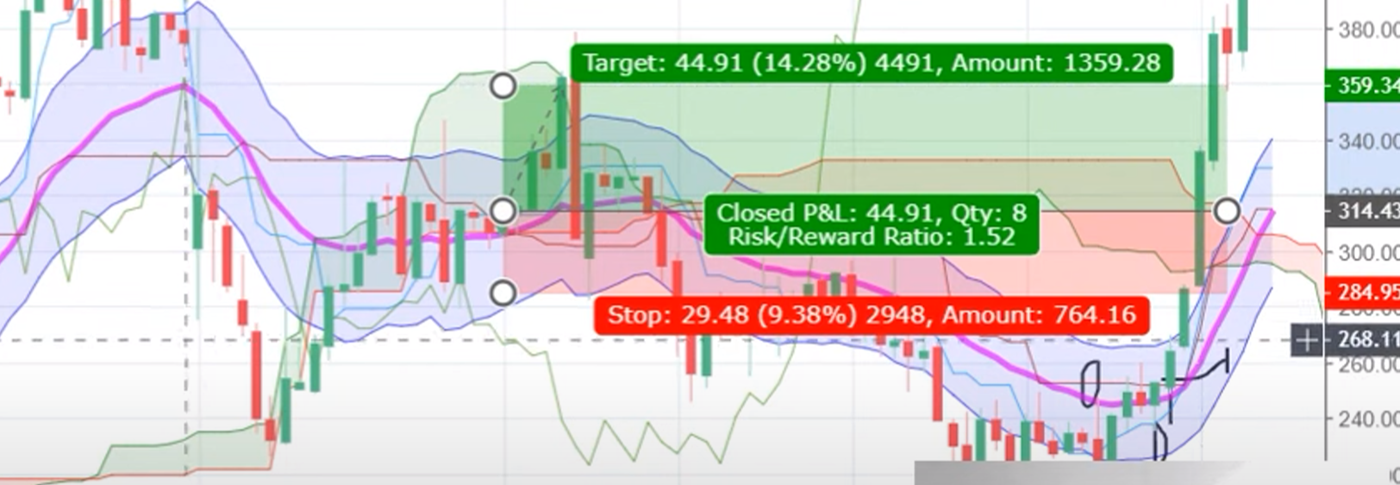
https://www.youtube.com/shorts/4RKq7nnxZpY?feature=share